IMPROVEMENT IN COUNTERFEIT-COIN DETECTORS.
The future bottle-cap king's early patent: a self-acting till that tests coins
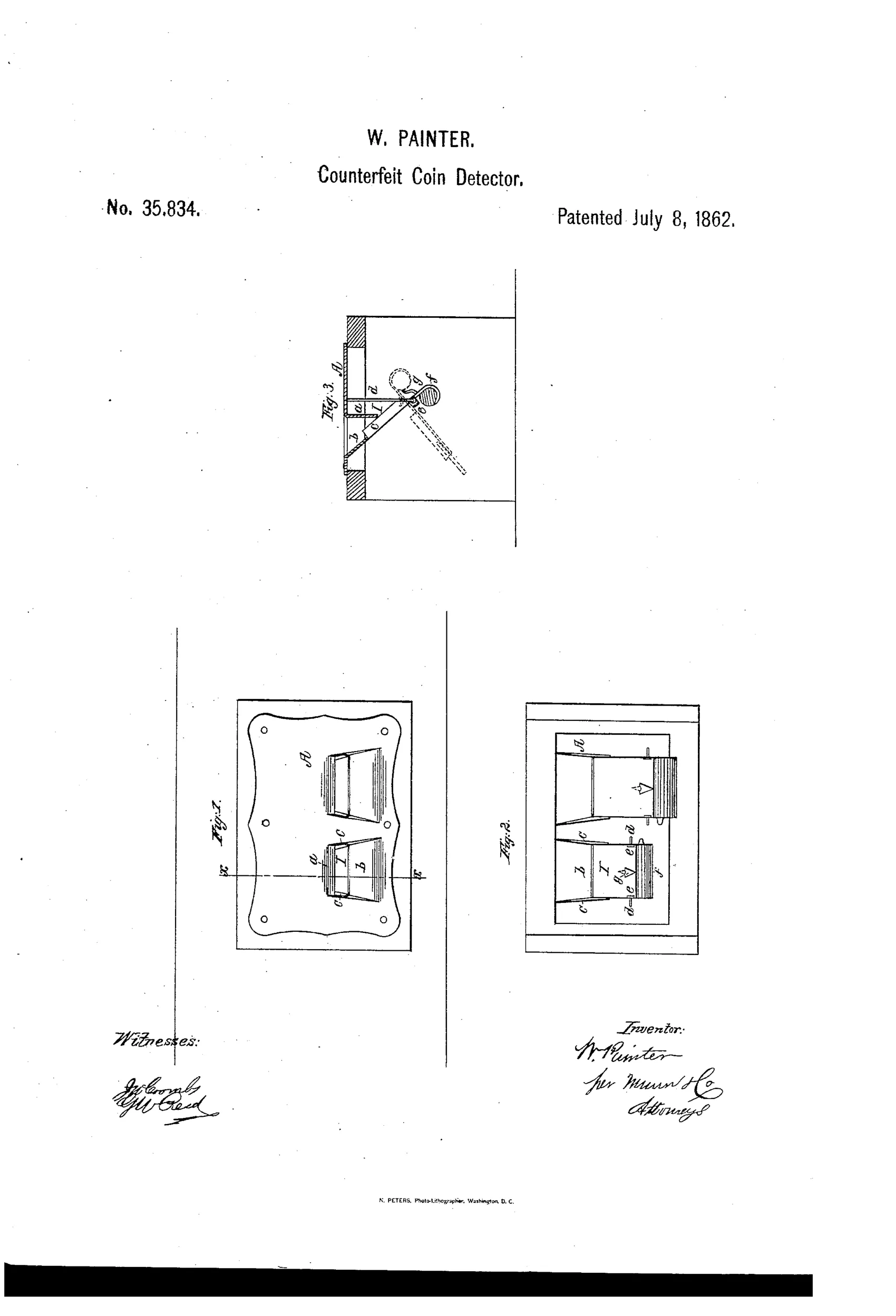
Device that weighs and sizes coins before deposit.
◉ How it works
A coin is placed on an inclined plane and slides by gravity into a suspended spout fitted with side gauges and a stop. If the coin matches the standard weight, it tips the counterbalanced spout, which drops it into the drawer below and then springs back under its counterweight. A coin that is too light, too large in diameter, or too thick cannot tip the spout or pass its gauged opening, so it is rejected before reaching the drawer. The spout hangs on pendent rods that can yield slightly to accommodate normal milling variations in coin edges.
◉ What was claimed
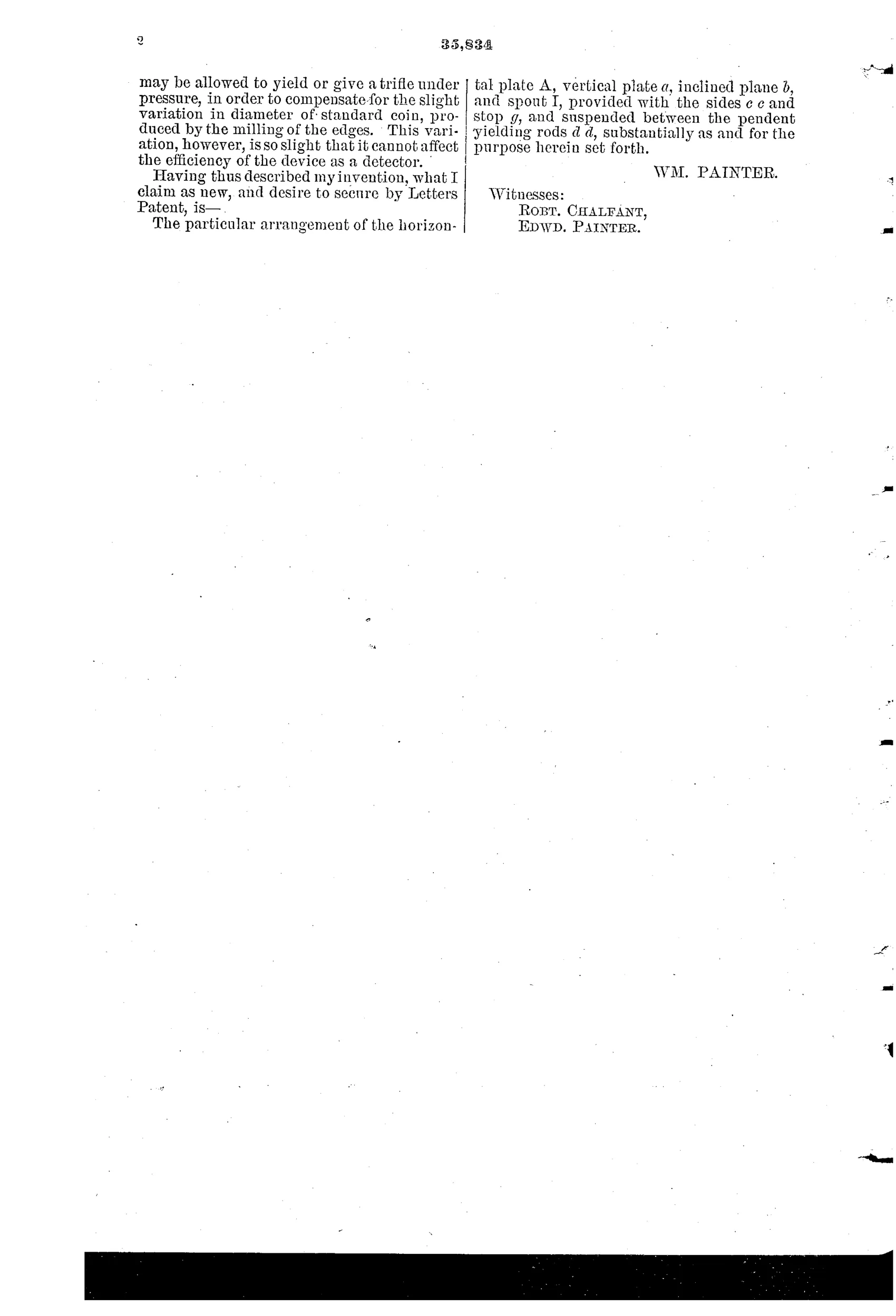
“The particular arrangement of the horizontal plate A, vertical plate a, inclined plane b, and spout I, provided with the sides c c and stop g, and suspended between the pendent yielding rods d d, substantially as and for the purpose herein set forth.”
In plain English: The claimed invention is the specific combination of a flat mounting plate, an angled back plate, an inclined ramp, and a gauged, weight-tipping spout hung on flexible rods, all working together to test and pass coins.
◉ In the inventor’s words
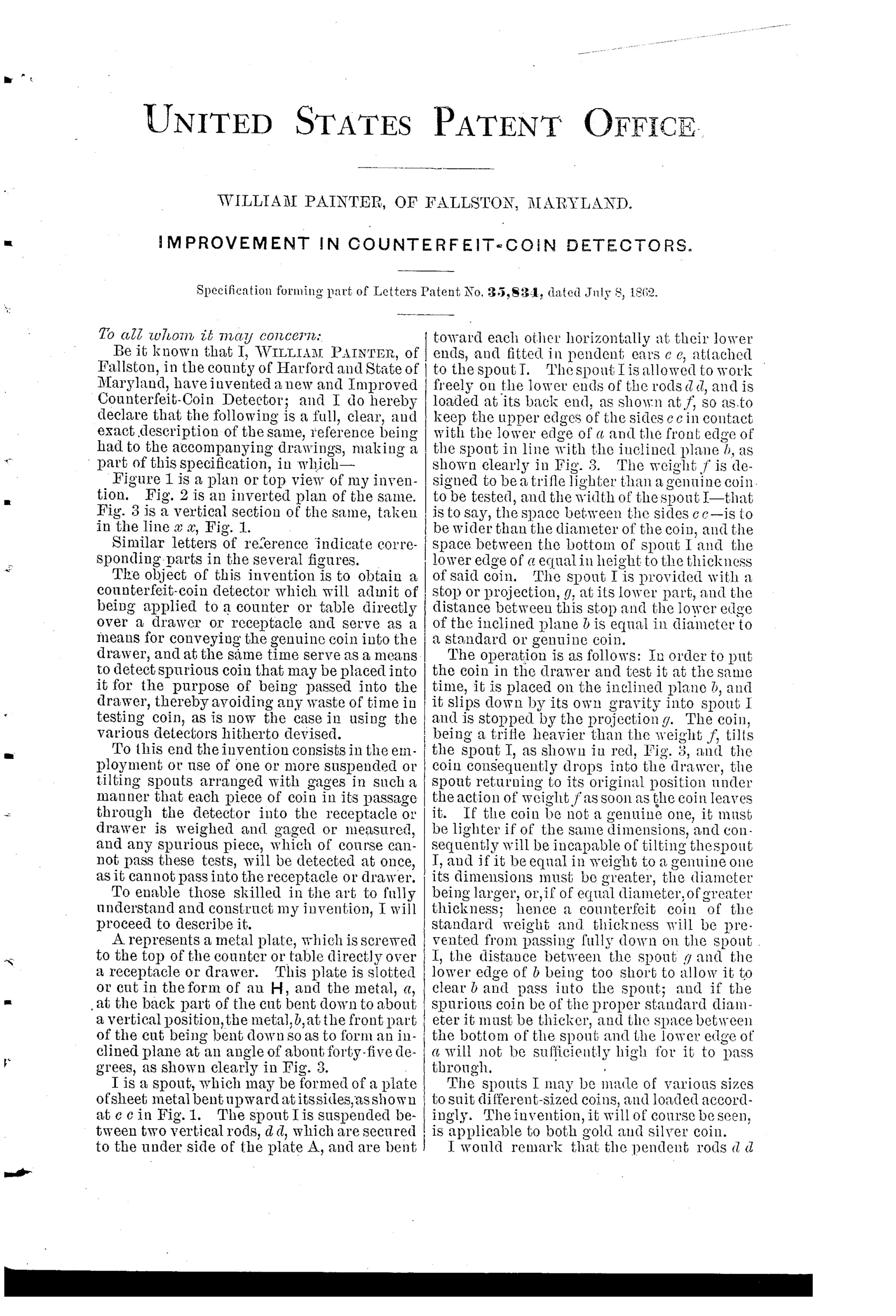
“The object of this invention is to obtain a counterfeit-coin detector which will admit of being applied to a counter or table directly over a drawer or receptacle and serve as a means for conveying the genuine coin into the drawer, and at the same time serve as a means to detect spurious coin that may be placed into it for the purpose of being passed into the drawer, thereby avoiding any waste of time in testing coin, as is now the case in using the various detectors hitherto devised.”— William Painter, from the specification
Fate unknown
No manufactured example or advertisement is documented; a surviving counter-mounted specimen or period trade listing would settle it.
◉ Commentary
The name at the top is the hook here. William Painter of Fallston, Maryland is almost certainly the same William Painter who, three decades later, would invent the crown cork — the crimped bottle cap still sealing beer bottles today — and found what became Crown Holdings. In 1862 he was a young mechanic tinkering with the merchant's oldest headache, and this detector reads like a first draft of the mind that would later obsess over cheap, reliable, one-motion mechanisms.
The idea itself is a genuine shift in the category. Allender-style rockers made the shopkeeper stop and test each coin by hand. Painter builds the test into the act of putting money away: the coin slides down a ramp into a counterbalanced spout hung on flexible rods. A genuine coin has the weight to tip the spout, drops into the drawer below, and the counterweight resets the spout. A light casting can't tip it; an oversized or thick fake can't clear the side gauges. Weight, diameter, and thickness checked in one gravity-fed motion — the same logic vending-machine chutes would rediscover twenty years later.
The subtle touch is in the claim: the pendent rods yield slightly so that normal milling variation on coin edges doesn't jam the gauges. That's the detail of someone who has actually fed coins through a prototype. As a product it likely went nowhere — but as an ancestor of the automatic coin chute, it's early and honest work.
Commentary by Claude, The Counterfeit Coin Detector Patent Archive’s resident enthusiast