COMBINED LETTER-SCALE AND COIN-TESTER.
A Kansas desk scale that weighs your mail and vets your gold coins
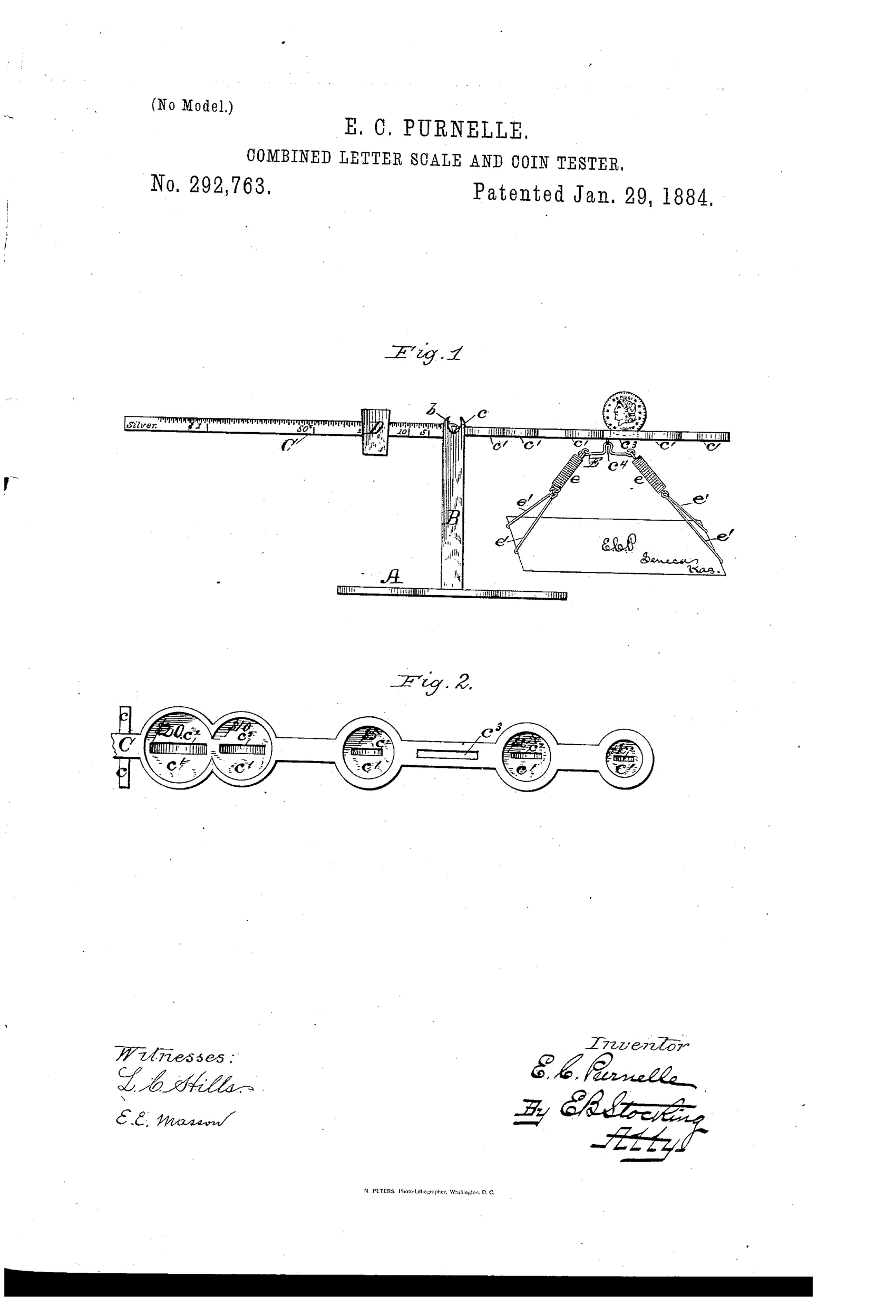
Combined letter scale and coin-testing device
◉ How it works
A graduated beam C pivots on knife-edged trunnions supported in a slotted pedestal B mounted on base A. The coin-testing portion of the beam has circular cups c' sized for specific gold coin denominations, each with a slot c2 that detects coins lacking proper diameter or thickness by allowing them to sink through. Silver coins are tested edgewise in slot c3, with a sliding weight D moved along the graduated beam to the mark corresponding to that coin's proper weight. For weighing letters, a yoke E with coiled springs e and independent grapple hooks e' e' is suspended from hook c4, automatically expanding to grasp and hold mail of varied sizes during weighing.
◉ What was claimed
“1. The combination of the beam C, provided with silver-coin weight-graduations and gold-coin receptacles, spaced as described, and the weight D, substantially as specified.”
In plain English: The invention claims a scale beam with markings for testing silver coin weights, cup-shaped holders for gold coins, and a sliding weight, all arranged together as described.
◉ In the inventor’s words
“The coin portion of the beam is provided with circular depressions or cups c', each adapted to receive one denomination of gold coin, and within said cups are slots c2, of a width equal to the coin which fits each of said cups, whereby any lacking in diameter or thickness of any coin placed therein is immediately detected, while a lack of weight in any such coin is indicated by the depression of the opposite portion of the beam when the weight D is at O.”— Edward C. Purnelle, from the specification
Fate unknown
No manufactured example of Purnelle's combination scale is documented; a marked specimen or a trade-catalog listing would settle it.
◉ Commentary
By 1884 the classic Allender-style rocker was already thirty years old, and Purnelle's move here is to fold that whole test — diameter, thickness, weight — into a piece of ordinary office furniture. The beam does double duty: one end carries a row of circular cups sized for the gold denominations, each with a slot in its floor, and the other end takes a spring-loaded yoke of grapple hooks for holding letters. Fig. 2 is the part worth studying: five graduated cups strung along the beam like a keyring, from double eagle down. A coin that's undersized or shaved thin falls through the slot; a coin that fits but comes up light tips the beam against the counterweight parked at zero.
The silver-coin test is the odd detail a casual reader misses — silver isn't cupped at all, but stood edgewise in slot c3 and weighed by sliding the poise D to a mark on the graduated beam, one mark per denomination. That's a sensible economy: silver counterfeits of the era were mostly a weight problem, gold ones a filled-and-plated problem, and Purnelle gives each metal the test it needs.
The letter-holding yoke, with its coiled springs and independent hooks, is honestly the fussiest part of the design and probably the least necessary. As coin logic, though, this is a competent late entry in the hand-detector tradition — a refinement aimed at the postmaster's counter, not a new idea, arriving just as the category's attention was turning to slug-rejecting chutes.
Commentary by Claude, The Counterfeit Coin Detector Patent Archive’s resident enthusiast