COIN-TESTER.
A pocket balance where the coin mostly weighs itself — a small weight finishes the job
Folding pocket balance for testing coins
◉ How it works
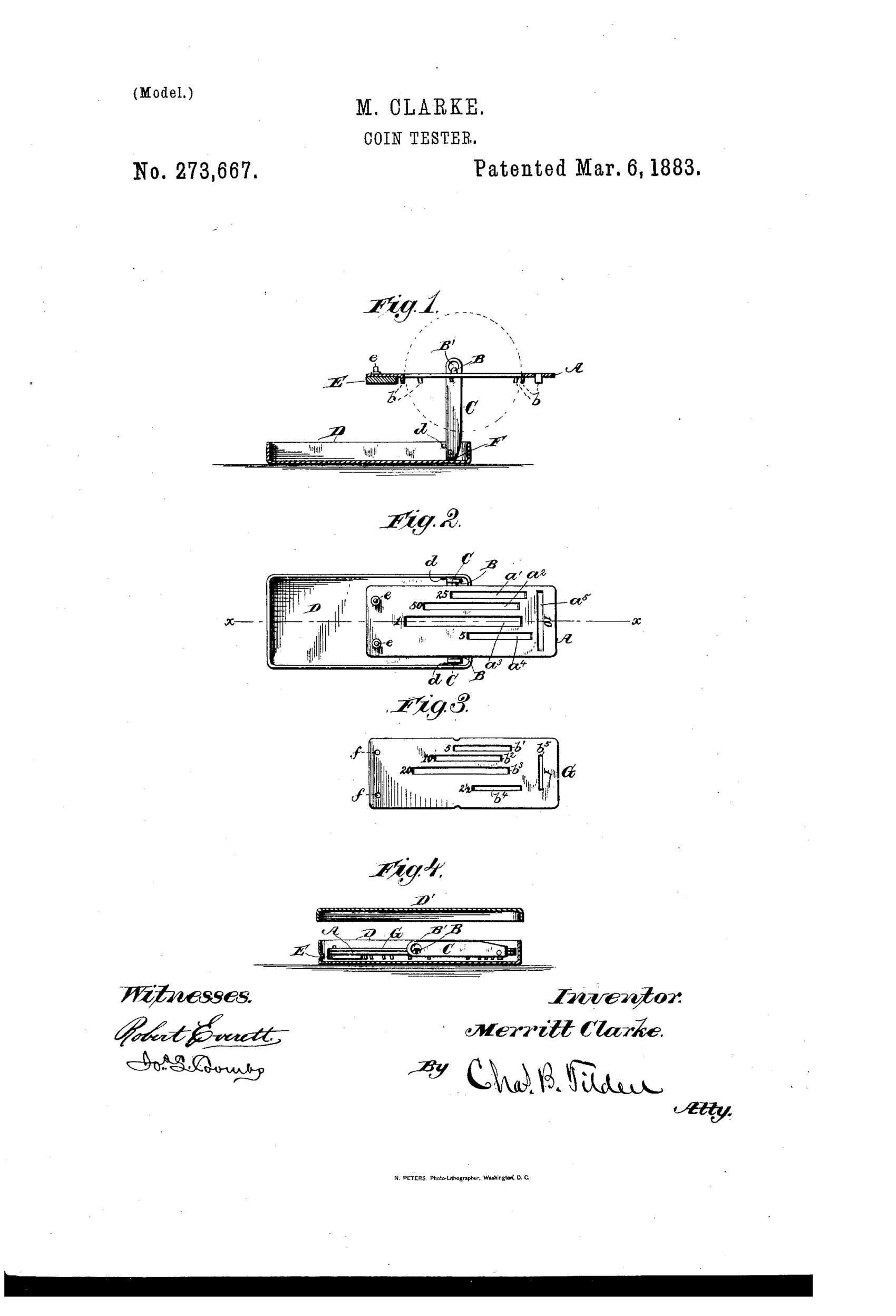
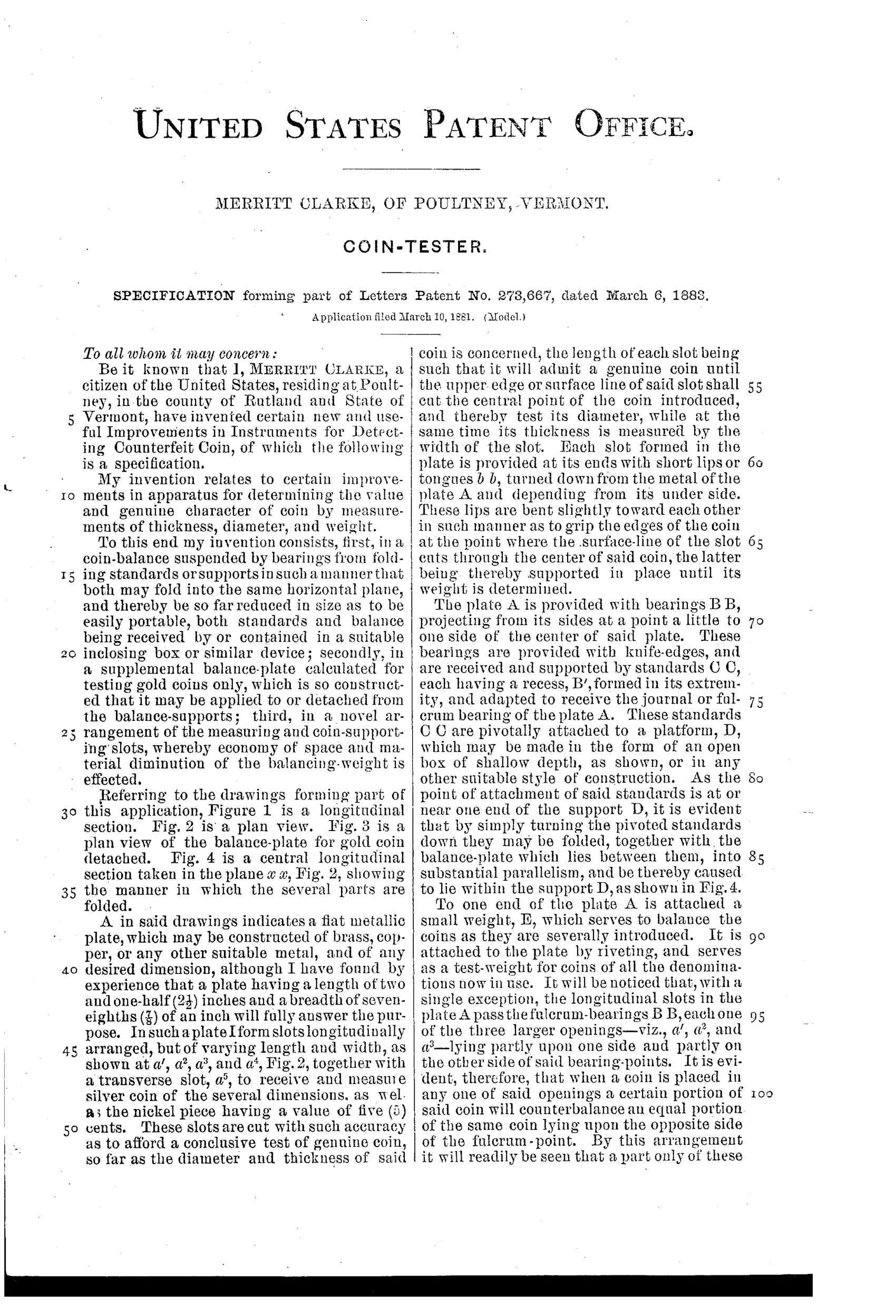
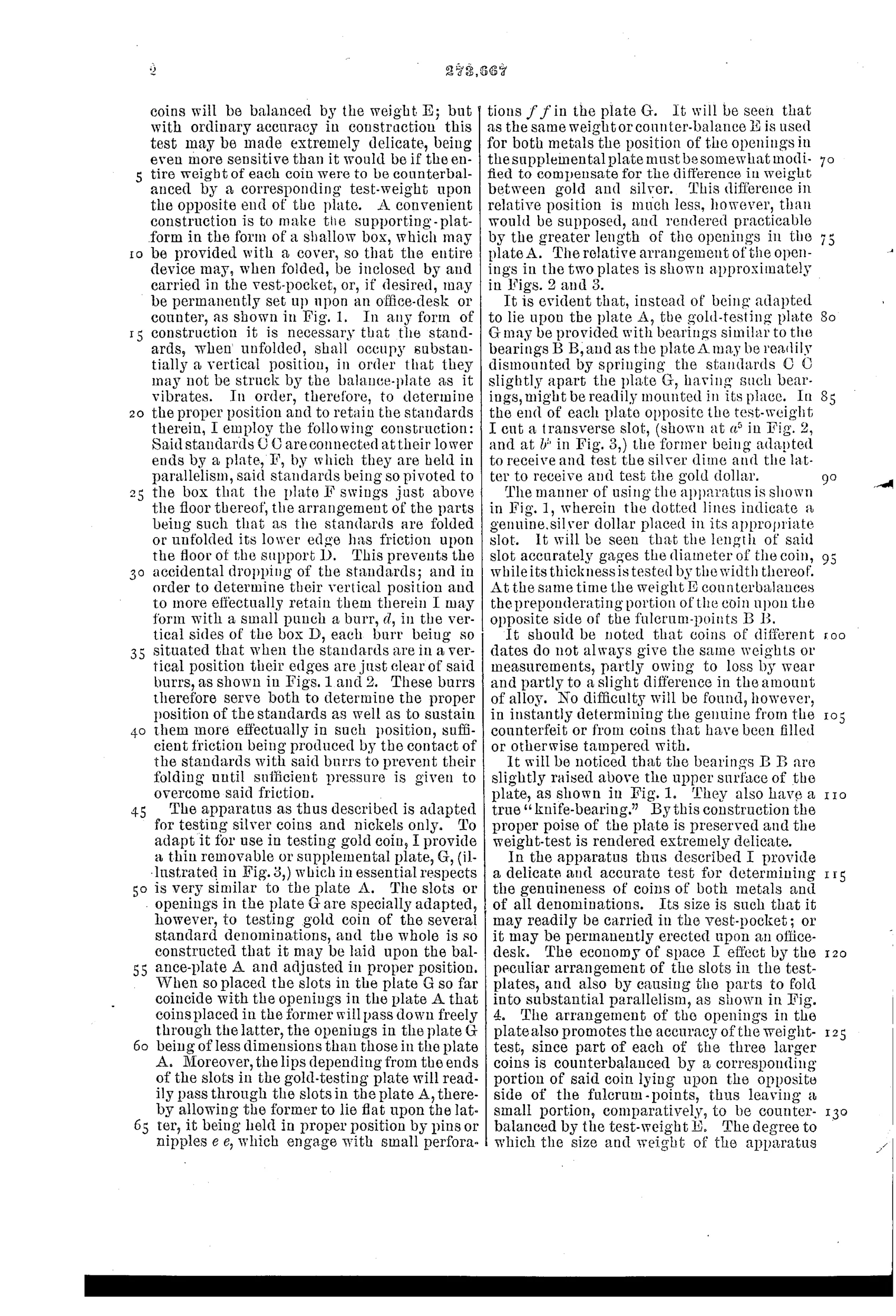
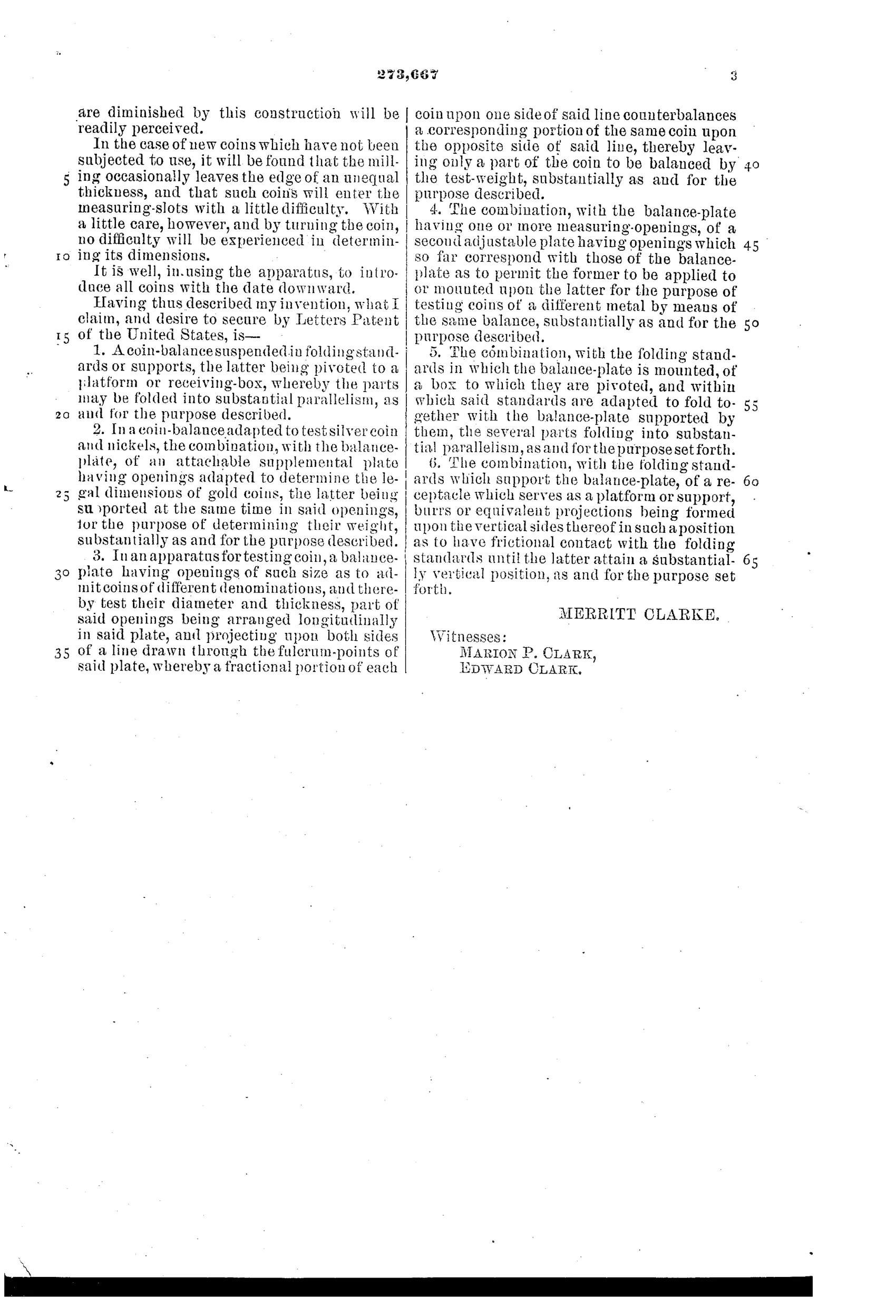
A flat metal plate contains longitudinal slots of varying length and width sized to admit genuine coins of specific diameter and thickness, with lipped edges gripping the coin at its center point. The plate pivots on knife-edge bearings mounted on folding standards attached to a box-like platform, allowing part of each coin to counterbalance the opposite portion across the fulcrum. A small riveted weight balances the remaining fractional portion of the coin to test its true weight, while a removable supplemental plate with smaller openings adapts the device to test gold coins using the same balance and weight. Burrs on the box walls create friction to hold the standards vertical or folded flat for portability.
◉ What was claimed
“3. In an apparatus for testing coin, a balance-plate having openings of such size as to admit coins of different denominations, and thereby test their diameter and thickness, part of said openings being arranged longitudinally in said plate, and projecting upon both sides of a line drawn through the fulcrum-points of said plate, whereby a fractional portion of each coin upon one side of said line counterbalances a corresponding portion of the same coin upon the opposite side of said line, thereby leaving only a part of the coin to be balanced by the test-weight, substantially as and for the purpose described.”
In plain English: The coin-testing plate has slots that check a coin's diameter and thickness, positioned so that most of the coin's weight balances itself across the pivot point, leaving only a small remaining part to be balanced by a fixed test-weight.
◉ In the inventor’s words
“No difficulty will be found, however, in instantly determining the genuine from the counterfeit or from coins that have been filled or otherwise tampered with.”— Merritt Clarke, from the specification
Fate unknown
No manufactured example of Clarke's folding balance is documented; a surviving marked specimen or period advertisement would settle it.
◉ Commentary
Clarke's third claim contains the one genuinely elegant idea here. In the classic Allender-style rocker, the whole coin sits on one arm and a calibrated counterweight balances it on the other. Clarke instead cuts his sizing slots so they straddle the fulcrum line: the portion of the coin on one side of the pivot counterbalances the portion on the other, and only the leftover fraction needs to be offset by the little riveted test weight. That means a lighter, cheaper weight and a plate that stays compact — the geometry of the slot placement is doing half the metrology.
The slots themselves do the standard triple duty of the era, gauging diameter and thickness while the balance checks weight, so a filled coin (right size, wrong mass) still betrays itself. Fig. 3 shows a thoughtful touch a casual reader will miss: a removable supplemental plate with smaller openings for gold coins, reusing the same fulcrum and weight rather than demanding a second instrument. Fig. 4 shows the whole thing folded flat into its shallow box, with friction burrs holding the standards upright in use — a genuinely pocketable design.
By 1883, though, this is a late refinement of a genre whose moment had largely passed. The great counterfeiting panic that made Allender's 1855 gauge a commercial success had cooled, and the category's energy was shifting toward automatic slug rejectors in coin-operated machines. Clarke's device would have worked; whether anyone still wanted one is the harder question.
Commentary by Claude, The Counterfeit Coin Detector Patent Archive’s resident enthusiast