IMPROVEMENT IN COMBINED SCALE AND COIN-TESTER
A postal letter scale moonlighting as a coin detector, gold on one side, silver the other
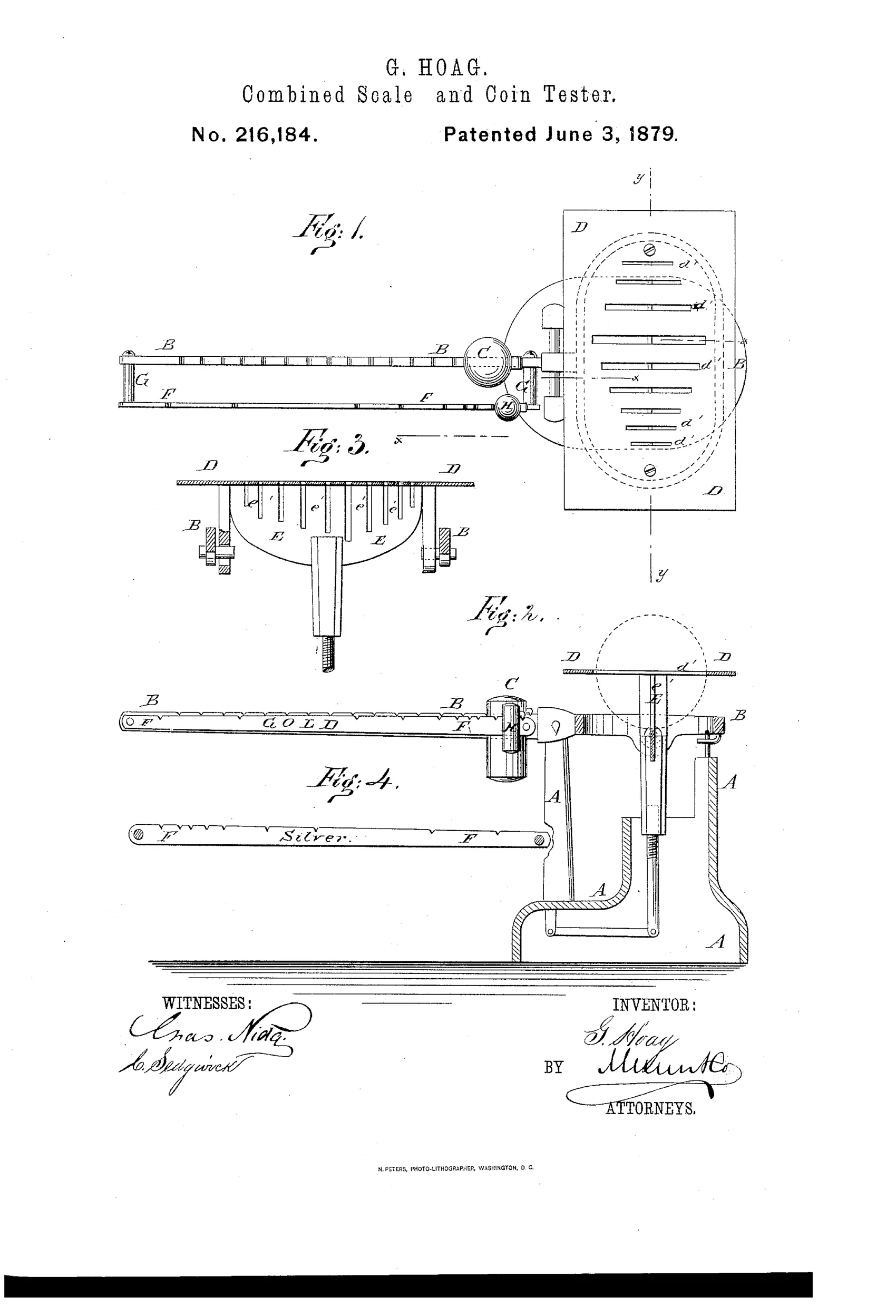
Combined letter scale and coin-testing gauge
◉ How it works
A flat scale-pan D has slots d' sized to the diameter and thickness of various gold and silver coins, letting a coin be checked for size and thickness by fitting it into the appropriate slot. A vertical plate E hangs beneath the pan with matching slots e' that hold the coin edge-on, in line with the pan, so its diameter is confirmed from below. A supplemental beam F, bolted parallel to the main scale beam B via bolts G, carries a sliding weight H that travels to notches marking the balance point for each coin denomination, allowing the device to weigh the coin as well. Gold-coin notches are marked on one side of beam F and silver-coin notches on the other, each labeled with the coin's value, so the same balance serves as both a postal letter scale and a coin-testing device.
◉ What was claimed
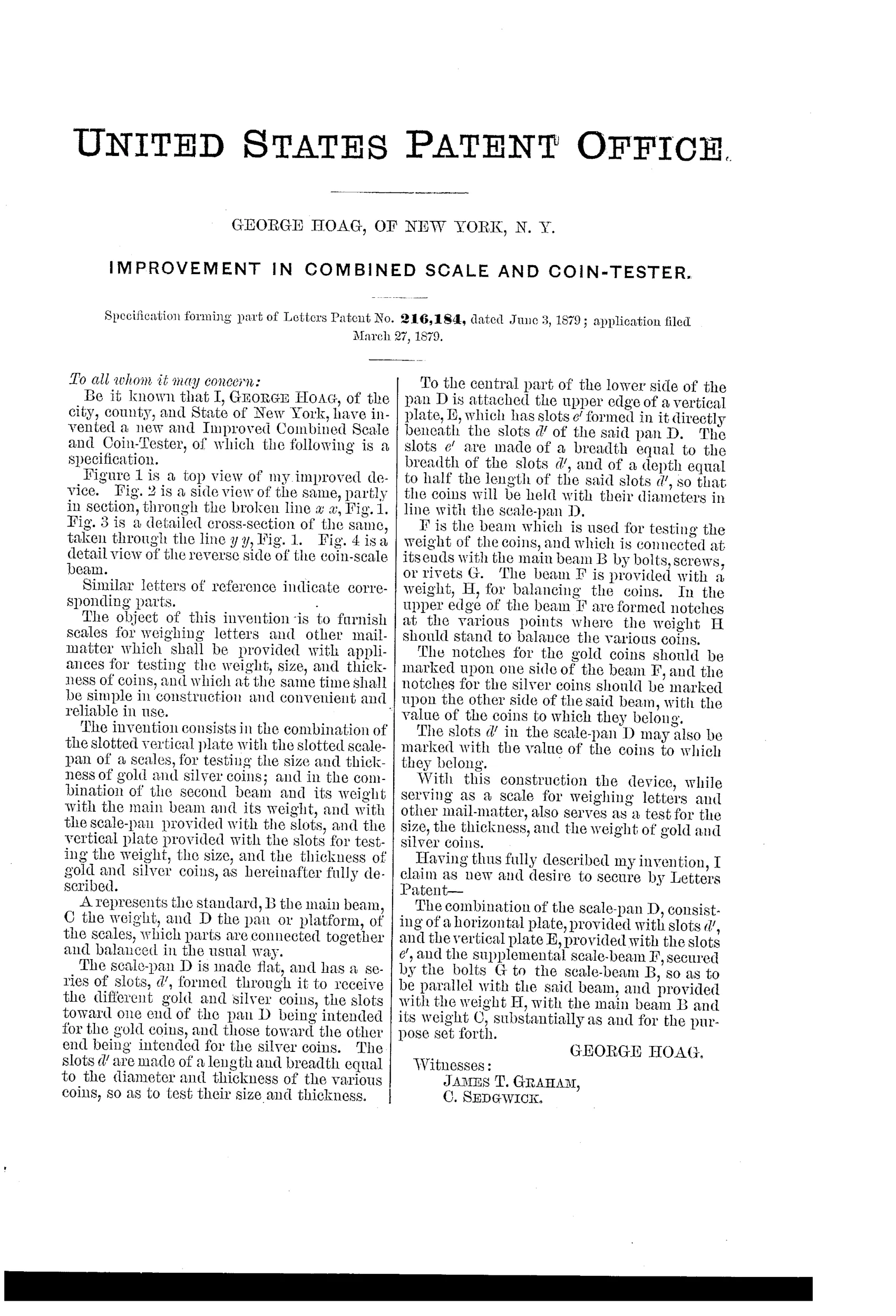
“The combination of the scale-pan D, consisting of a horizontal plate, provided with slots d', and the vertical plate E, provided with the slots e', and the supplemental scale-beam F, secured by the bolts G to the scale-beam B, so as to be parallel with the said beam, and provided with the weight H, with the main beam B and its weight C, substantially as and for the purpose set forth.”
In plain English: The invention combines a slotted coin pan and matching slotted vertical plate with a second, bolted-on weighted beam parallel to the main scale beam, so the device can both weigh mail and test the size, thickness, and weight of coins.
◉ In the inventor’s words
“The object of this invention is to furnish scales for weighing letters and other mail-matter which shall be provided with appliances for testing the weight, size, and thickness of coins, and which at the same time shall be simple in construction and convenient and reliable in use.”— George Hoag, from the specification
Fate unknown
No marked example of Hoag's combined scale is documented to me; a surviving letter scale with the two-sided coin beam would settle it.
◉ Commentary
By 1879 the Allender-style rocker had been around for a quarter century, and Hoag's idea was to fold that whole toolkit into something an office already owned: a letter balance. The scale-pan D is cut with slots sized to each denomination's diameter and thickness, and a vertical plate E hangs beneath it with matching slots so a coin can be dropped edge-on and checked from below. Weight comes from a supplemental beam F bolted parallel to the main beam, with a sliding poise and notched stations — and Fig. 4 shows the nice economy of it: gold denominations engraved on one face, silver on the other, so one small beam covers the whole circulating coinage.
The part a casual reader will miss is in Fig. 3: the slots e' in the hanging plate line up under the pan slots, so the coin isn't just gauged flat against the pan — it sits in a channel that tests diameter and thickness at once, exactly the double check the classic brass rockers performed. Hoag hasn't invented a new test; he's relocated the tests onto a machine that earns its counter space weighing mail.
It would work, though a swinging scale-pan is a less steady gauging surface than a rigid rocker, and by 1879 filled and shaved coin was a fading menace. This is a late, clever repackaging of the classic era's method rather than a step toward the coin-chute future.
Commentary by Claude, The Counterfeit Coin Detector Patent Archive’s resident enthusiast