IMPROVEMENT IN COUNTERFEIT-COIN DETECTERS
A postal scale moonlighting as a coin detector, with nested bull's-eye depressions
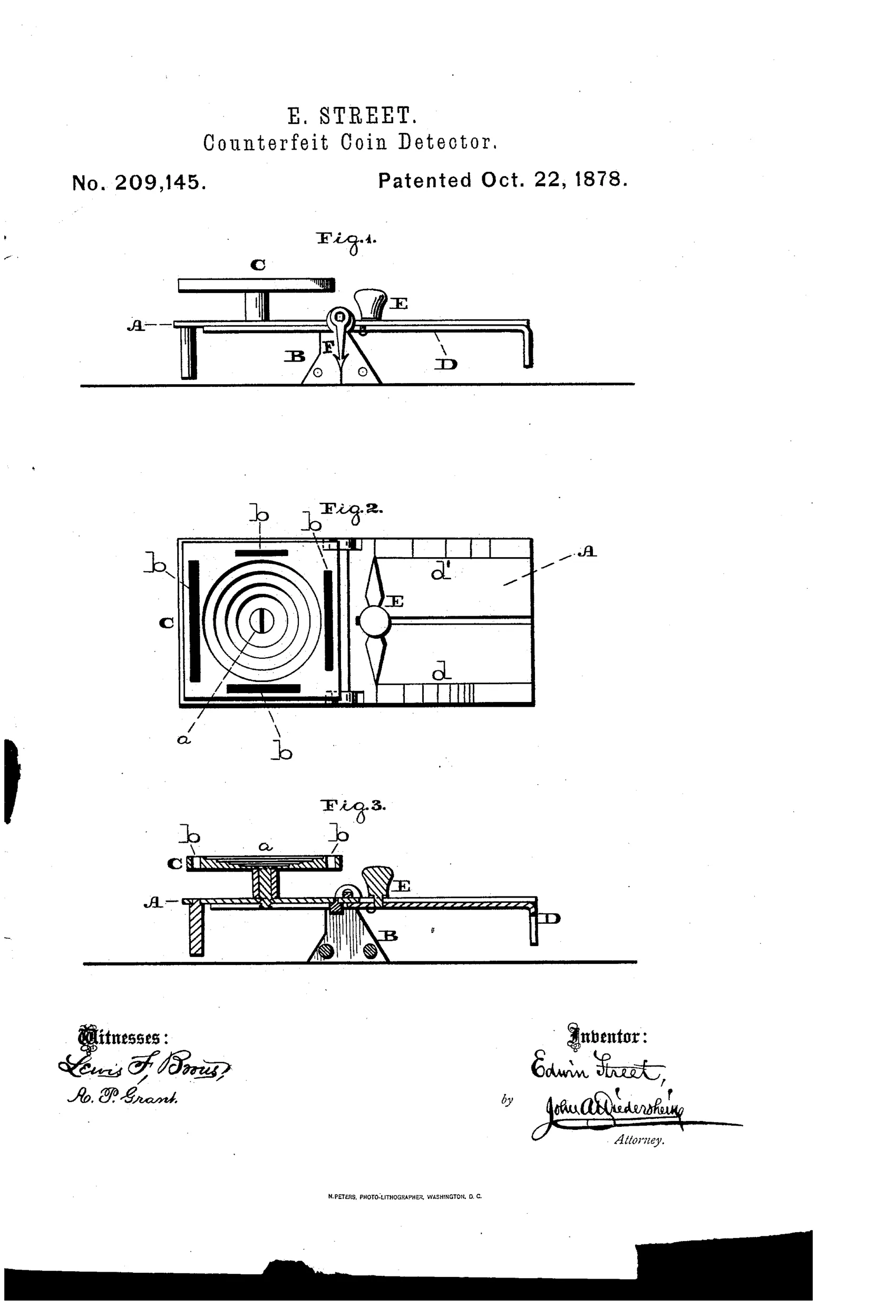
Combined letter scale and counterfeit-coin detector
◉ How it works
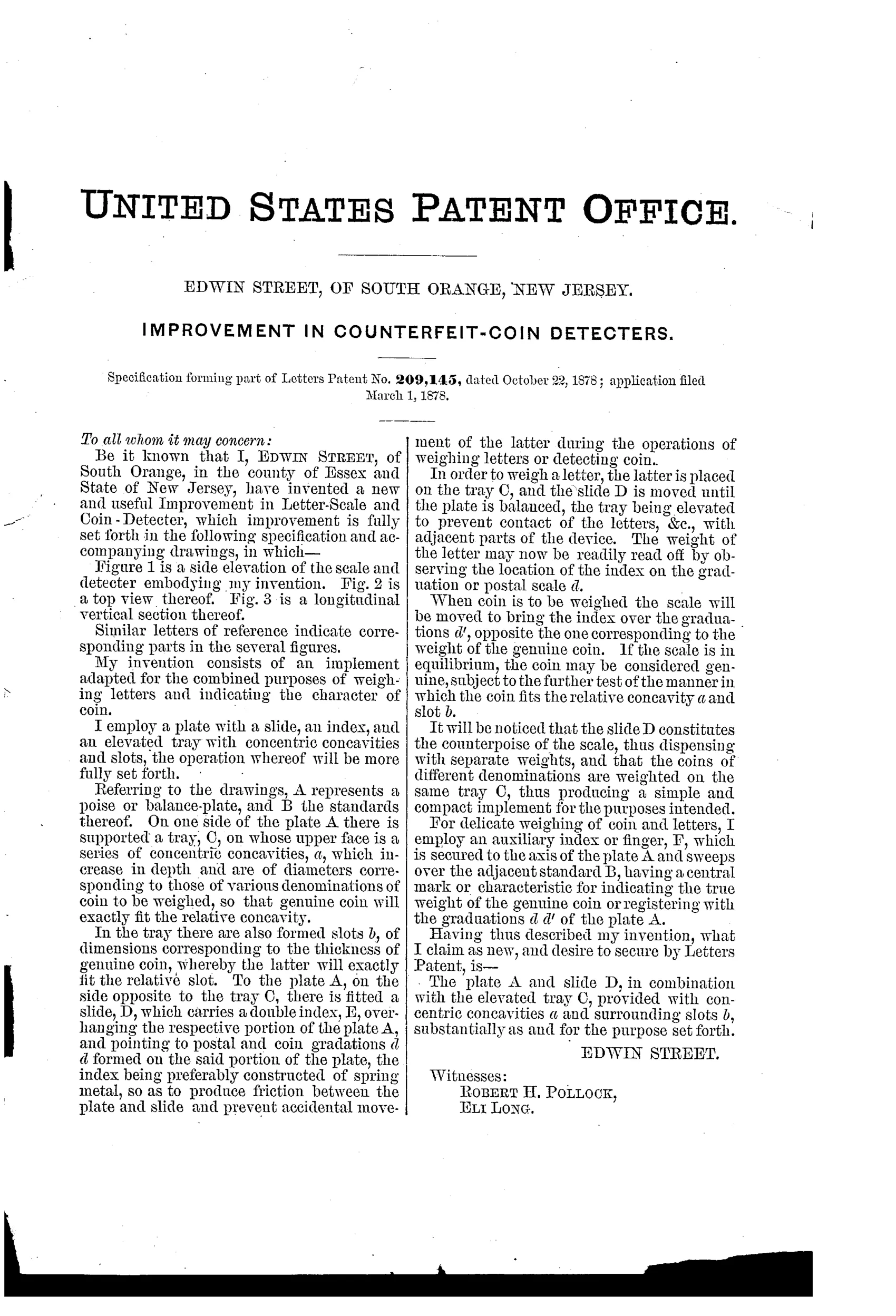
A poise or balance-plate A rests on standards B and carries a slide D with a double index E that reads against graduations d and d' marking postal weight and coin values. A tray C mounted on the plate has a series of concentric concavities a of increasing depth and diameters matching various coin denominations, plus surrounding slots b sized to the thickness of genuine coin. A letter or coin is placed on tray C and the slide D moved until the beam balances, with the index E showing the letter's weight or, for coin, confirming genuineness if it matches the graduation for that coin's true weight while also fitting snugly into its corresponding concavity and slot. An auxiliary spring-metal index F pivots on the axis of plate A for finer readings and to prevent accidental movement of the parts.
◉ What was claimed
“The plate A and slide D, in combination with the elevated tray C, provided with concentric concavities a and surrounding slots b, substantially as and for the purpose set forth.”
In plain English: The claim covers the balance plate and its sliding weight combined with the raised tray that has nested coin-shaped depressions and matching edge slots, used together for weighing letters and checking coins.
◉ In the inventor’s words
“If the scale is in equilibrium, the coin may be considered genuine, subject to the further test of the manner in which the coin fits the relative concavity a and slot b.”— Edwin Street, from the specification
Fate unknown
No manufactured example of Street's combined scale is documented to my knowledge; a marked specimen or period trade advertisement would settle it.
◉ Commentary
Edwin Street's answer to the coin-testing problem was to piggyback it on a tool every shop and office already wanted: a letter scale. The balance plate carries a slide with a double index reading against two sets of graduations — postal weights on one scale, coin values on the other. Weigh your letter Monday morning, check a suspect half-dollar Monday afternoon, same instrument.
The clever economy is in the tray, and Fig. 2 shows it best: instead of a row of separate coin apertures like Allender's 1855 gauge, Street nests his sizing depressions concentrically, like a target. Each denomination drops into the ring of matching diameter, with the depths graduated so a coin of the right thickness sits flush. The slots around the tray edge give a second thickness check. It's a compact way to test diameter and thickness for a whole series of coins in one small footprint.
Where it falls short of the classic rockers is precision of the weight test. Allender's gauges balanced a specific coin against a fixed calibrated counterweight — pass or fail, unambiguous. Street asks the user to slide a poise and read an index, which introduces judgment and slop exactly where the filled-coin counterfeit lives, since a plugged coin might be off by only a few grains. As a letter scale with a coin-checking bonus it's sensible; as a dedicated detector it's a step softer than the pocket balances that made the category famous.
Commentary by Claude, The Counterfeit Coin Detector Patent Archive’s resident enthusiast