IMPROVEMENT IN COUNTERFEIT-COIN DETECTERS.
A drop-through tester built to spot a fake without insulting the customer
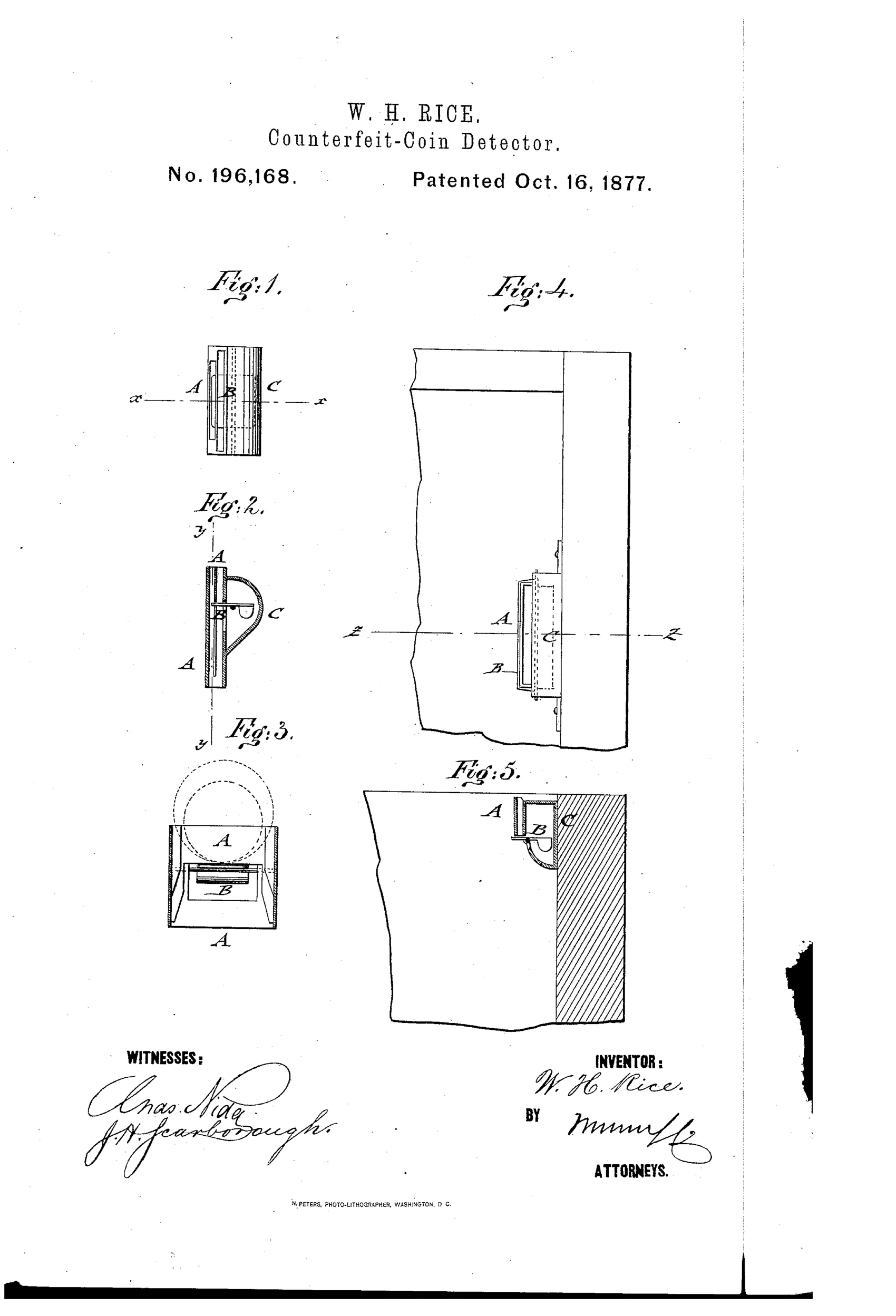
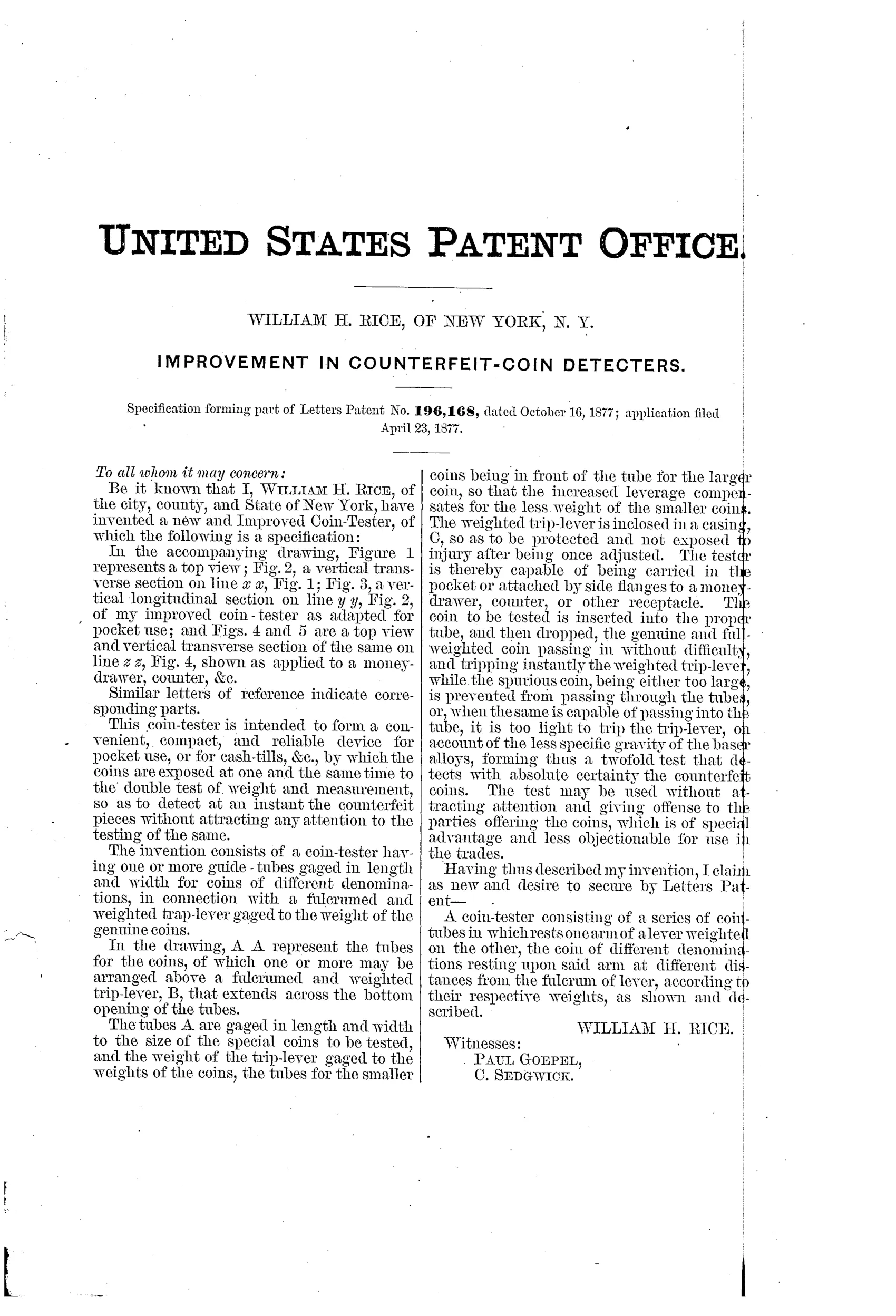
A pocket or counter coin-testing device
◉ How it works
The device uses one or more gauged tubes sized to the length and width of genuine coins of specific denominations, with a fulcrumed, weighted trip-lever spanning the bottom opening of each tube. A genuine coin, correctly sized, drops through the tube and its weight trips the lever, allowing it to pass; a coin that is oversized cannot enter the tube, while an undersized or underweight counterfeit lacks the specific gravity to trip the weighted lever. The trip-lever mechanism is enclosed in a protective casing to keep it from being tampered with or exposed to damage after adjustment. The tester can be carried in a pocket or mounted via side flanges to a money-drawer or counter for discreet use.
◉ What was claimed
“A coin-tester consisting of a series of coin-tubes in which rests one arm of a lever weighted on the other, the coin of different denominations resting upon said arm at different distances from the fulcrum of lever, according to their respective weights, as shown and described.”
In plain English: The invention is a coin tester with several tubes, each holding one end of a weighted lever, where coins of different values sit at different distances from the lever's pivot point according to how much they should weigh.
◉ In the inventor’s words
“The test may be used without attracting attention and giving offense to the parties offering the coins, which is of special advantage and less objectionable for use in the trades.”— William H. Rice, from the specification
Fate unknown
No marked example of Rice's tester is documented in collections; a surviving pocket or drawer-mounted specimen would settle it.
◉ Commentary
Rice's device is a bridge between the two eras of this category. It still tests what the Allender-style rockers tested — size and weight together — but instead of a visible balance beam that announces suspicion across the counter, the coin simply drops through a gauged tube and either trips a hidden weighted lever or doesn't. His own specification says the point plainly: the test works "without attracting attention and giving offense to the parties offering the coins." That social engineering is the real invention here.
Mechanically it's tidy. The tube gates diameter and thickness; the trip-lever at the bottom gates weight, with coins of different denominations resting at different distances from the fulcrum so one calibrated counterweight can serve several values. A light electrotype shell that fits the tube still fails, because it lacks the mass to trip the lever. Note the enclosed casing (C in Figs. 2 and 5) — Rice explicitly protects the lever from tampering and from losing its adjustment, a detail a lot of contemporaries skipped.
Figures 4 and 5 are the part a casual reader misses: the same mechanism flanged into a money-drawer or counter, so the merchant tests coins in the ordinary motion of making change. That's essentially a coin chute a decade before coin-operated machines made chutes the whole game. Rice was chasing discretion; the vending industry would later chase automation with almost the same hardware.
Commentary by Claude, The Counterfeit Coin Detector Patent Archive’s resident enthusiast