IMPROVEMENT IN COIN-COUNTERS
Berlin, 1876: the balance test automated, a decade before vending machines needed it
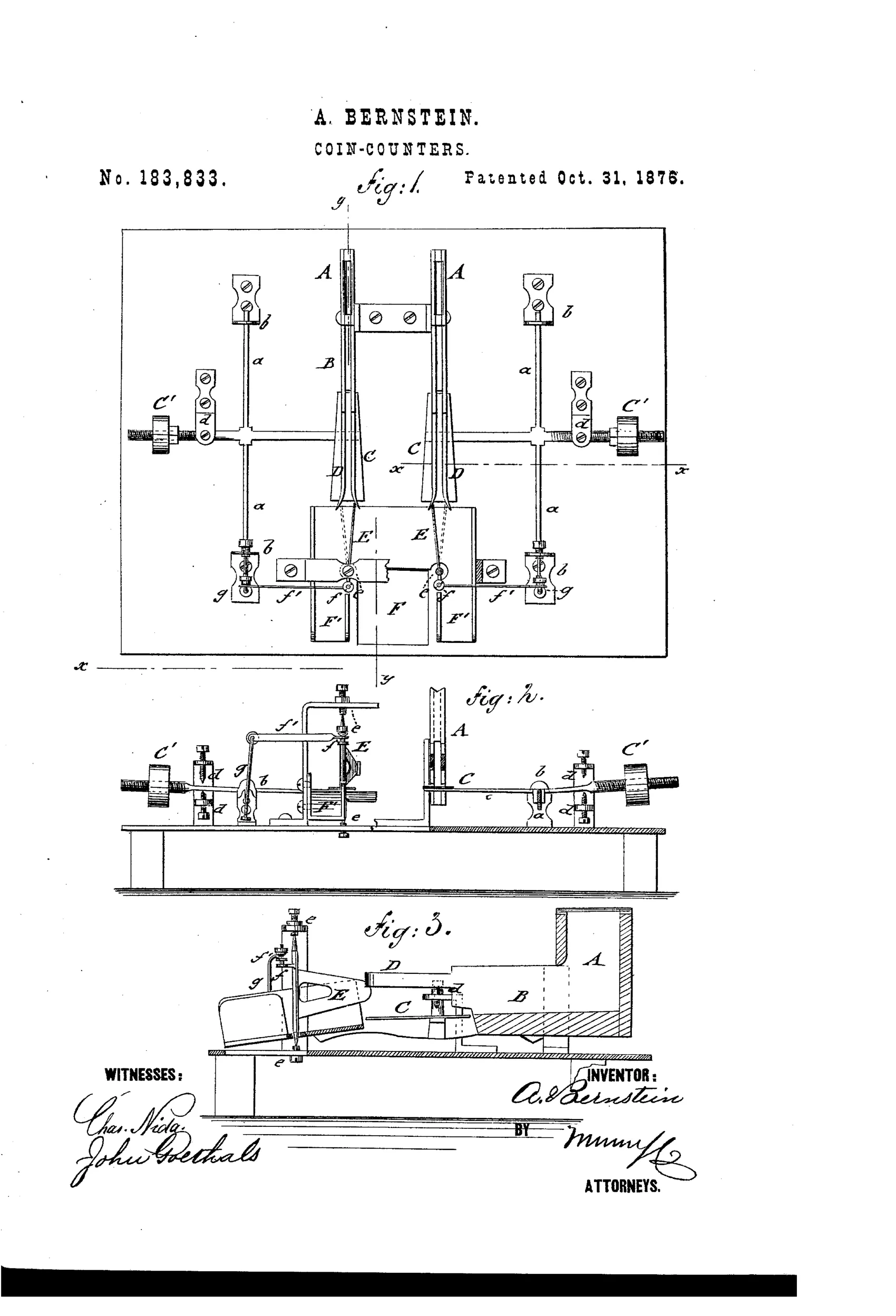
Automatic apparatus for detecting counterfeit or underweight gold coins
◉ How it works
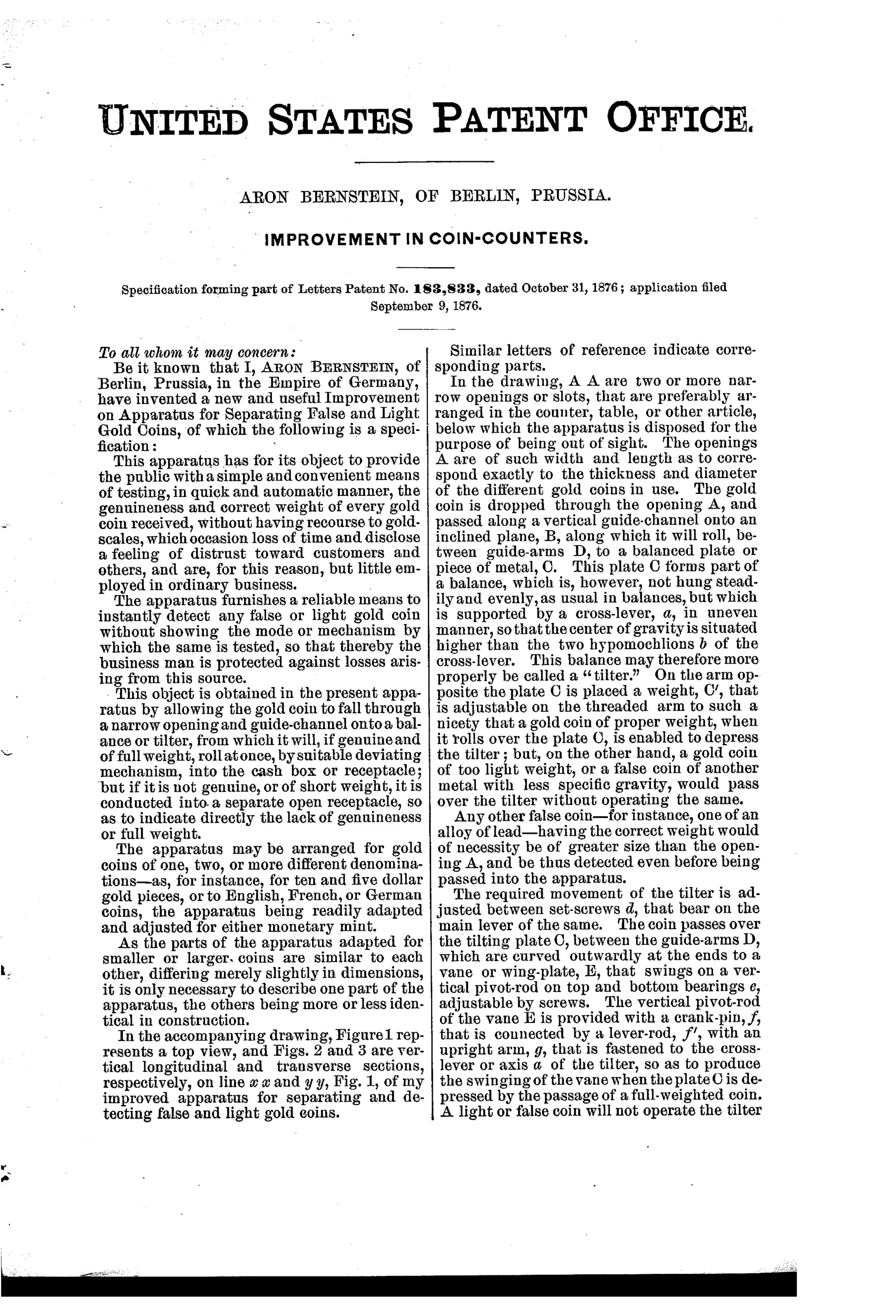
A gold coin is dropped through a narrow sizing slot A and rolls down an inclined guide-channel B between guide-arms D onto a small tilting plate C, which is part of an unevenly balanced tilter suspended on a cross-lever a whose center of gravity sits above its two pivot points b, making it act more like a tipping rocker than a conventional balance. A counterweight C' is adjustable along a threaded arm so that only a coin of full weight and correct specific gravity will depress the plate; light, false, or wrong-alloy coins fail to tip it. When the tilter is depressed, its cross-lever motion is transmitted through an arm g, lever-rod f', and crank-pin f to swing a vertically pivoted vane E, which deflects genuine coins down a chute into the cash box F. Coins that do not depress the tilter leave the vane in its normal position and are guided instead along an inclined spout F' into a separate open receptacle, visibly exposing any defective coin.
◉ What was claimed
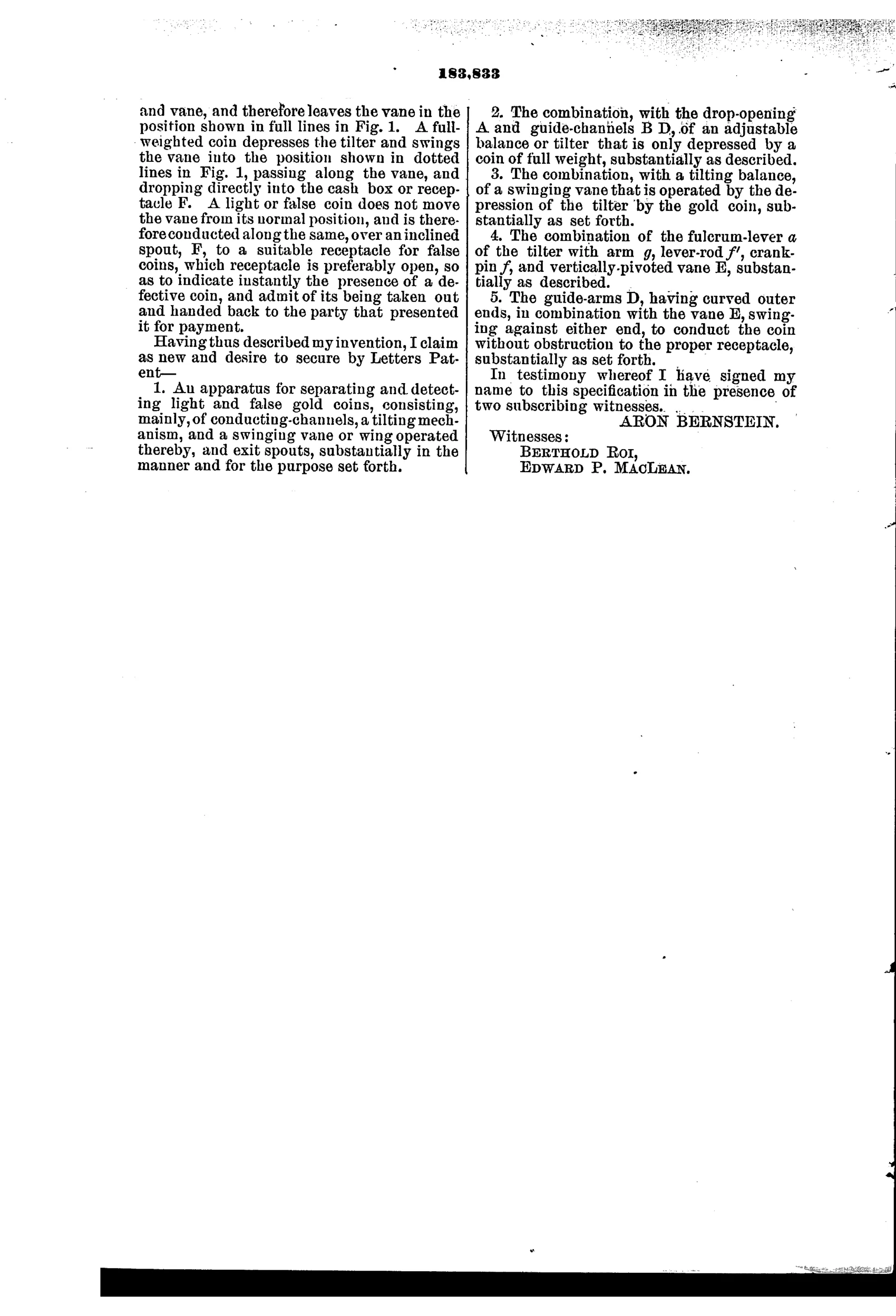
“An apparatus for separating and detecting light and false gold coins, consisting, mainly, of conducting-channels, a tilting mechanism, and a swinging vane or wing operated thereby, and exit spouts, substantially in the manner and for the purpose set forth.”
In plain English: The invention combines coin channels, a tipping balance mechanism, and a swinging vane with separate exit chutes to automatically sort genuine gold coins from light or counterfeit ones.
◉ In the inventor’s words
“The apparatus furnishes a reliable means to instantly detect any false or light gold coin without showing the mode or mechanism by which the same is tested, so that thereby the business man is protected against losses arising from this source.”— Aron Bernstein, from the specification
Fate unknown
No manufactured example or trade advertisement is documented on either side of the Atlantic; a surviving marked apparatus or a German counterpart record would settle it.
◉ Commentary
Bernstein's apparatus takes the classic hand-detector logic — a genuine coin must pass a sizing slot and tip a calibrated counterweight — and makes it self-acting. The coin drops through slot A, rolls down a channel, and lands on a small tilting plate. If it's full weight, the tilter dips, and that dip is passed through a linkage to swing a vane that steers the coin into the cash box. A light or filled coin fails to trip the vane and slides out into an open tray where the clerk can see it. Nobody handles a scale; the machine tests and sorts in one motion.
The mechanically interesting choice is in the drawing rather than the claim: the cross-lever carries its center of gravity above its two pivot points, so the tilter behaves like a tipping rocker with a threshold, not a slow-settling balance. That's the right instinct for a machine that must decide quickly and reset itself — a proper beam would oscillate while coins piled up behind it.
Where it sits in the story matters. In 1876 there were no coin-operated machines demanding slug rejectors; those in-chute weight gates arrive in the 1880s and 1890s. Bernstein got to the architecture — gravity feed, threshold rocker, deflecting gate, dual exits — early, aimed at the counting-house rather than the vending machine. The weakness is the one all weight-only tests share: a well-made slug of correct weight and diameter sails through. His own selling point, that the machine hides how it tests, cuts both ways.
Commentary by Claude, The Counterfeit Coin Detector Patent Archive’s resident enthusiast