COIN DEPOSITORY
A push-button slug trap for Mills Novelty, with wire fingers that probe for holes
Fraud-preventing coin entrance mechanism for coin-operated machines
◉ How it works
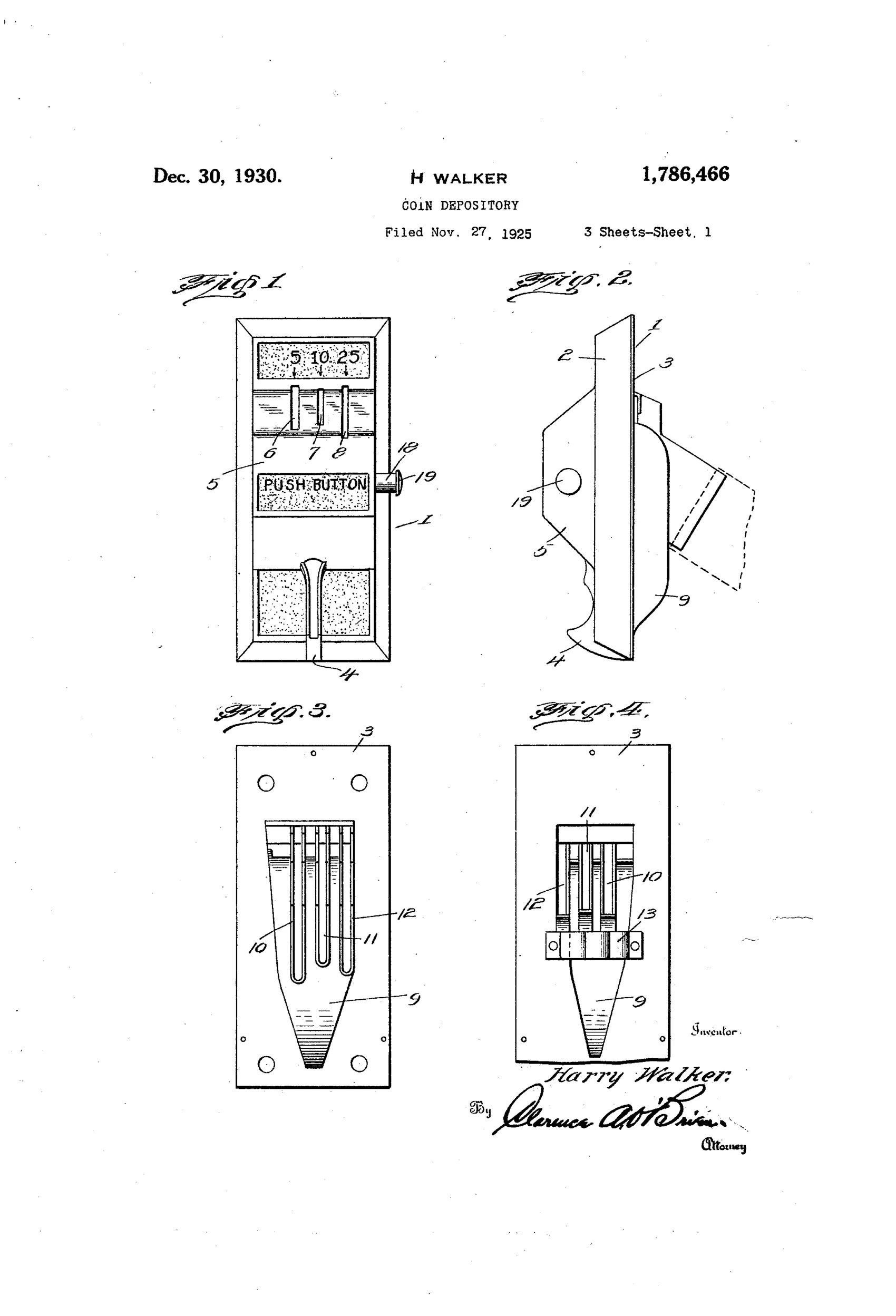
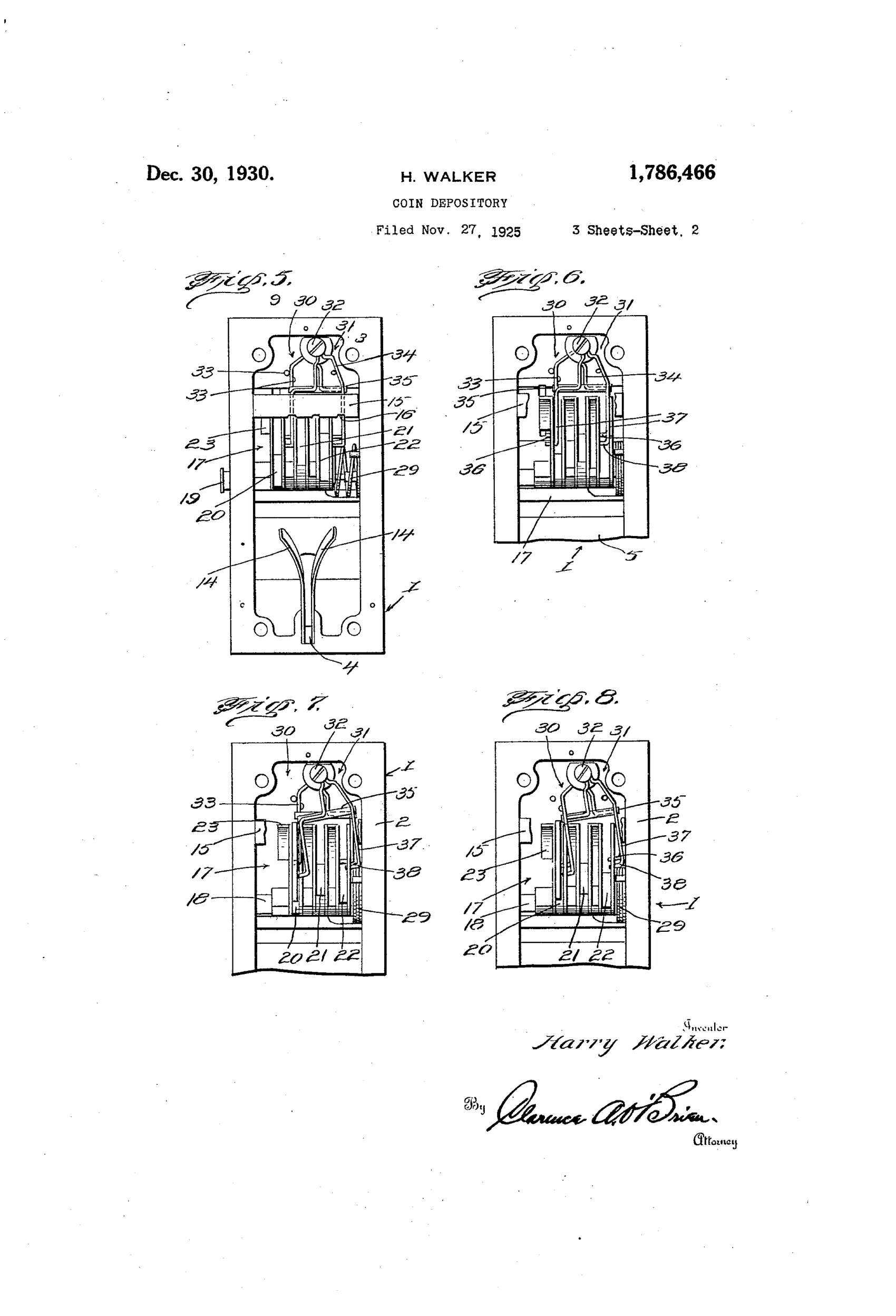
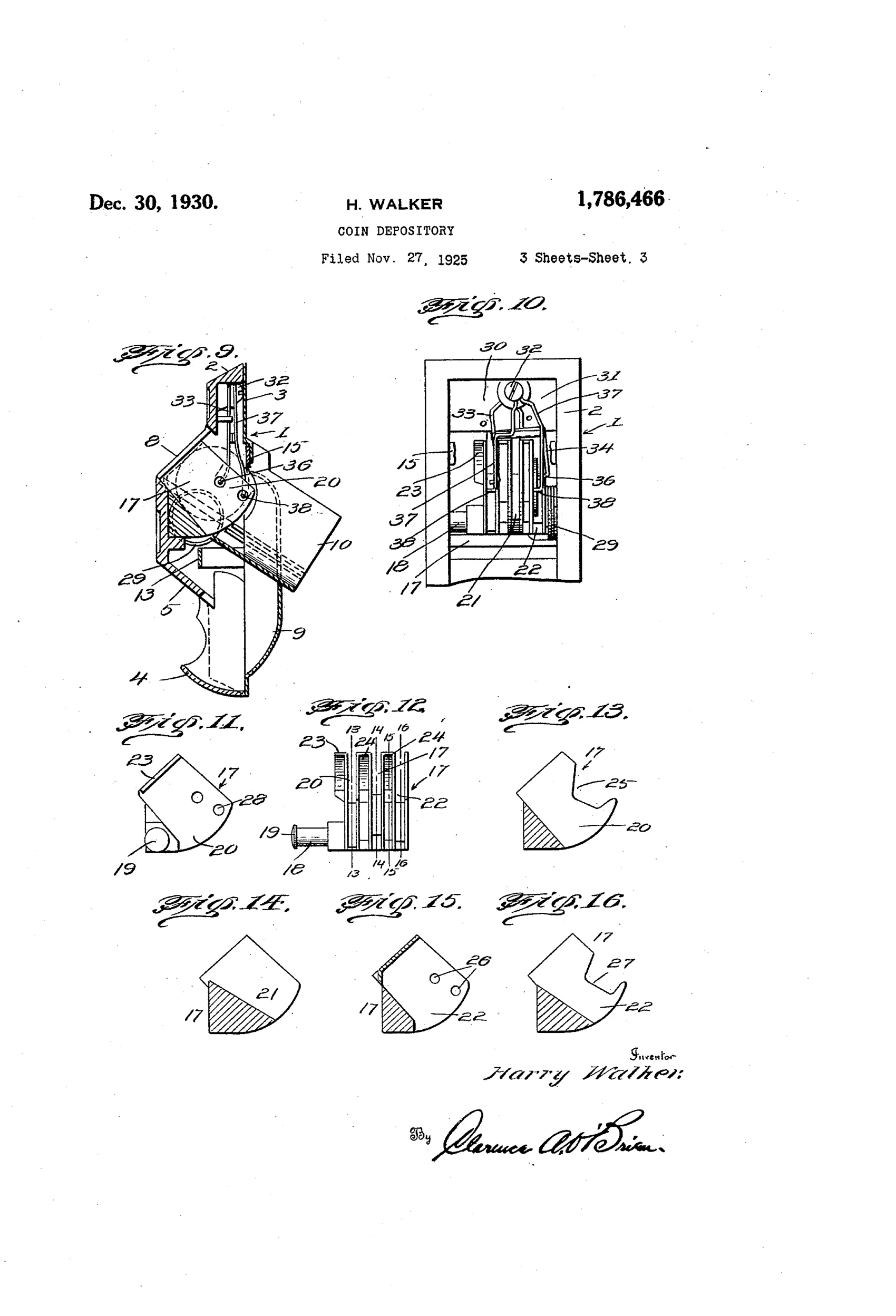
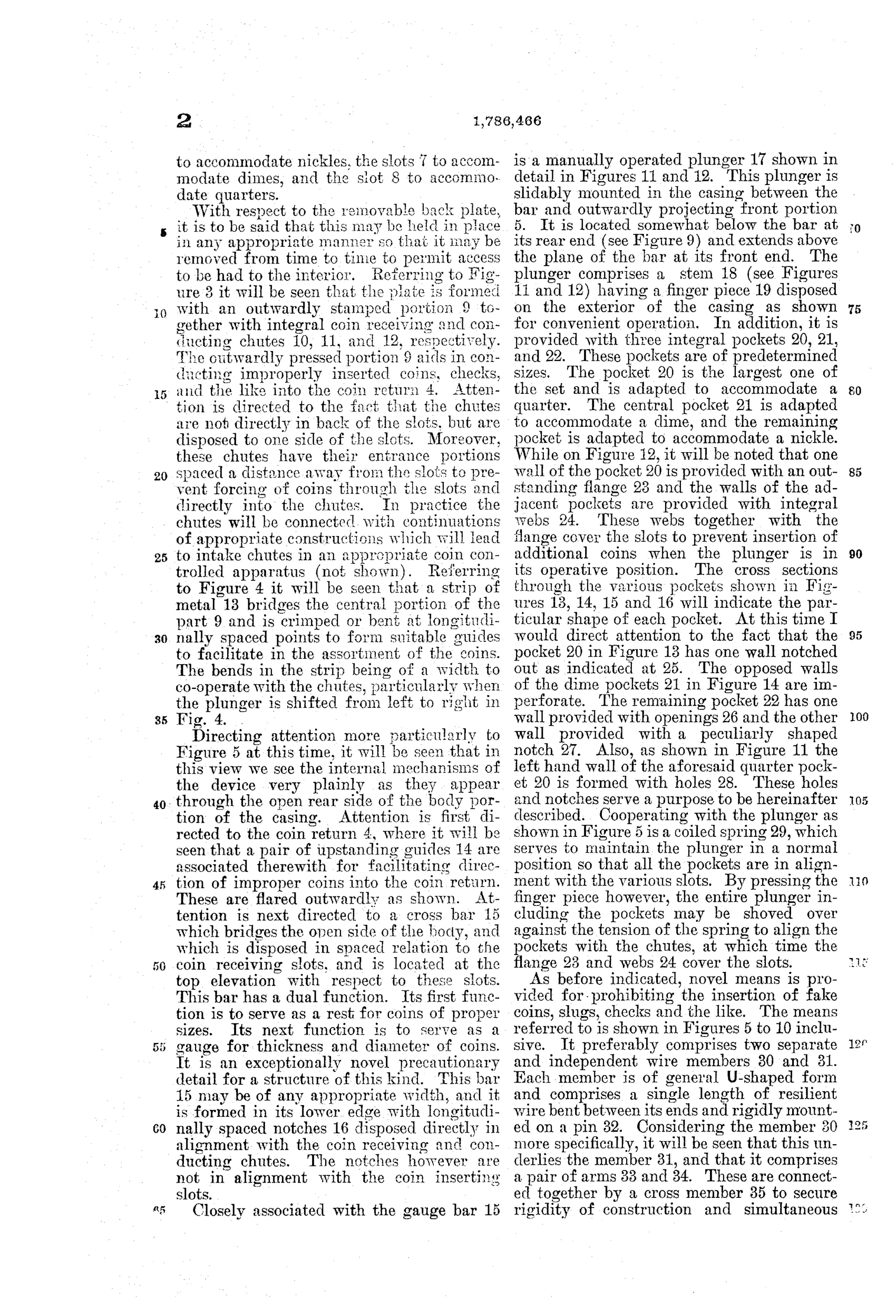
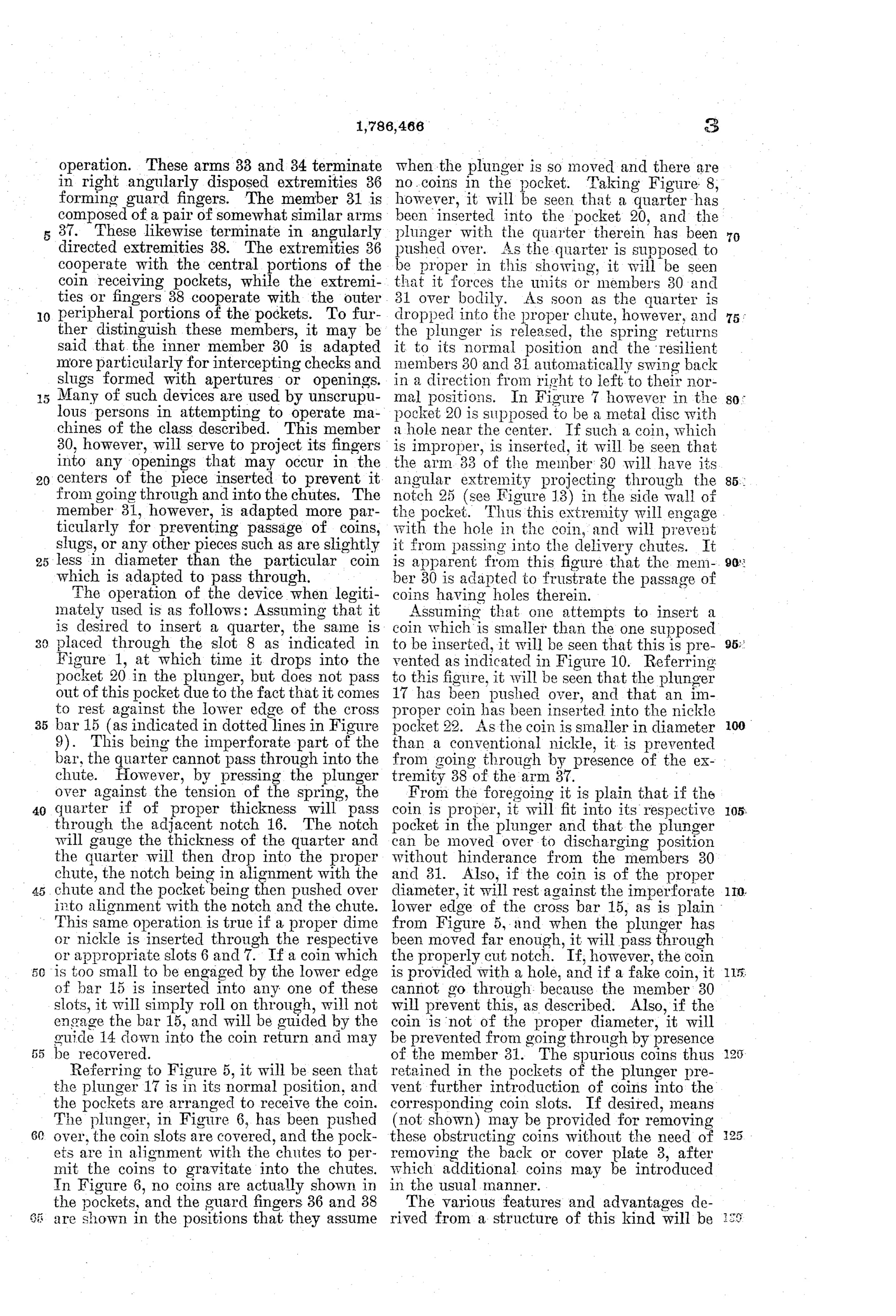
A casing has separate slots for nickels, dimes, and quarters leading to individual chutes offset from the slots. A spring-loaded plunger with sized pockets must be manually shoved over to align each pocket with its chute, and a notched gauge bar checks coin thickness before passage. Two independent U-shaped resilient wire members with angularly bent guard fingers project into the pockets to catch slugs with holes or coins of improper diameter, preventing them from reaching the chutes. Improperly sized coins that fail to engage the gauge bar simply roll through guides into a coin return at the bottom.
◉ What was claimed
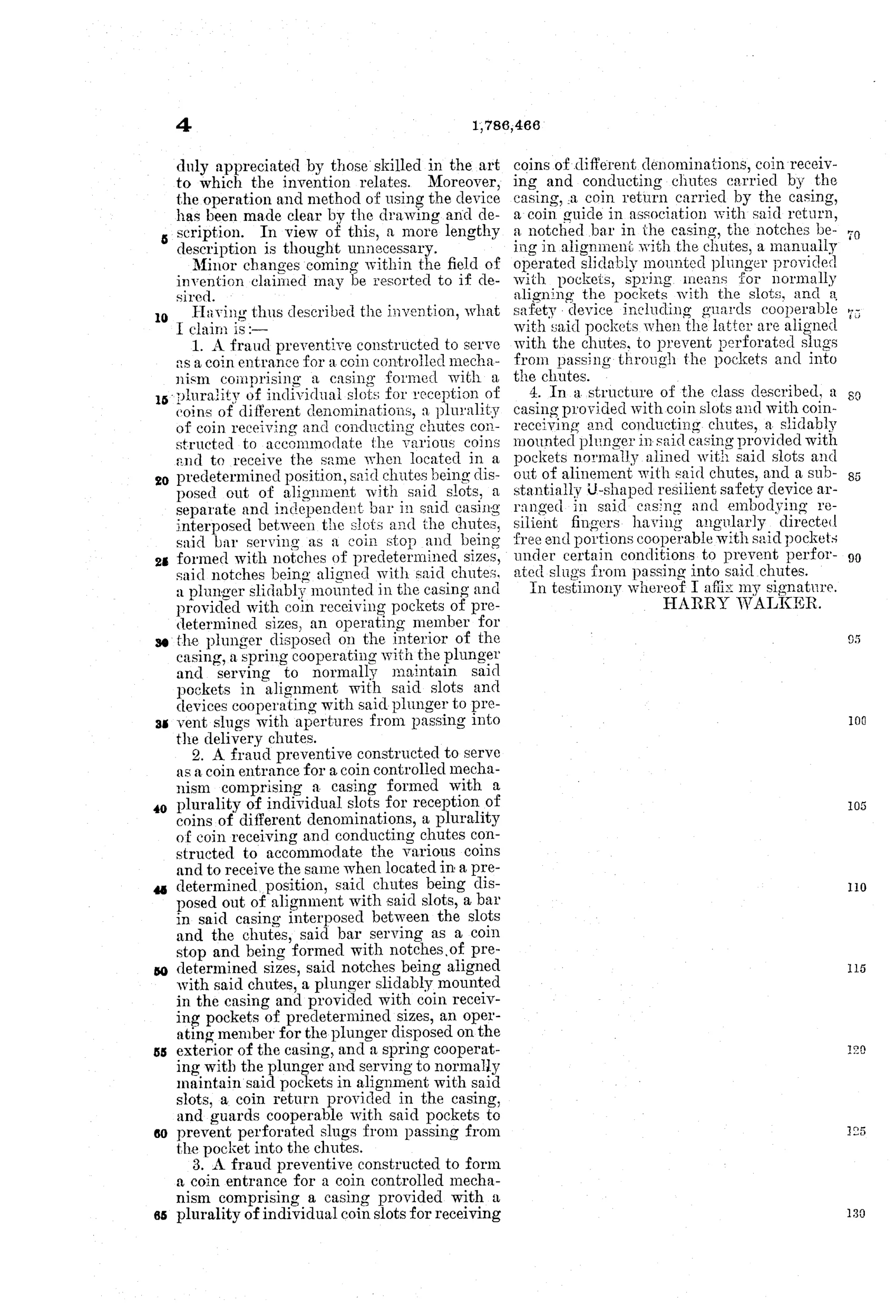
“A fraud preventive constructed to serve as a coin entrance for a coin controlled mechanism comprising a casing formed with a plurality of individual slots for reception of coins of different denominations, a plurality of coin receiving and conducting chutes constructed to accommodate the various coins and to receive the same when located in a predetermined position, said chutes being disposed out of alignment with said slots, a separate and independent bar in said casing interposed between the slots and the chutes, said bar serving as a coin stop and being formed with notches of predetermined sizes, said notches being aligned with said chutes, a plunger slidably mounted in the casing and provided with coin receiving pockets of predetermined sizes, an operating member for the plunger disposed on the interior of the casing, a spring cooperating with the plunger and serving to normally maintain said pockets in alignment with said slots and devices cooperating with said plunger to prevent slugs with apertures from passing into the delivery chutes.”
In plain English: The device is a coin entrance with slots for different coins, offset delivery chutes, a notched gauge bar that stops coins of wrong thickness, a spring-returned plunger with sized pockets that must be manually shifted to feed coins into the chutes, and guard mechanisms that stop perforated slugs from passing through.
◉ In the inventor’s words
“My principal aim is to so construct and arrange the means on the interior of the casing to prevent fraud and to intercept insertion of improper coins, whereby to preclude persons from inserting illegitimate checks, slugs, or improper coins.”— Harry Walker, from the specification
Fate unknown
Mills Novelty certainly built multi-coin entrances, but confirming this specific plunger-and-guard-finger design shipped would require matching a surviving Mills mechanism to the patent drawings.
◉ Commentary
Most slug rejectors of the 1920s are passive: the coin rolls down a chute past magnets and gauges, and physics does the sorting. Walker's design is aggressive by comparison. The coin sits in a sized pocket on a spring-loaded plunger, and nothing happens until the customer pushes the button — only then does the pocket shift over to align with its delivery chute. That deliberate offset between slot and chute is the heart of the first claim, and it kills the classic cheat of fishing a coin back out on a string: once the plunger is shoved, the coin is committed.
The cleverest detail is easy to miss in the drawings: the U-shaped resilient wire members with bent guard fingers that project into the pockets. A genuine coin, being solid and of full diameter, deflects the fingers out of the way. A washer or a punched slug lets a finger drop into the hole and hang up, blocking passage. It's a mechanical feel test for perforated slugs — a problem the sizing aperture and gauge bar alone can't catch, since a washer can match a nickel's diameter and thickness perfectly.
The assignment to Mills Novelty Company matters. Mills was the giant of coin-operated machines, and this three-denomination entrance (5-10-25 across the faceplate) reads like a working mechanism for their music and vending lines, not an inventor's daydream. Whether this exact plunger design shipped, or was superseded internally before the 1930 issue date, is harder to say — five years in prosecution suggests it was one candidate among many in Mills' patent portfolio.
Commentary by Claude, The Counterfeit Coin Detector Patent Archive’s resident enthusiast