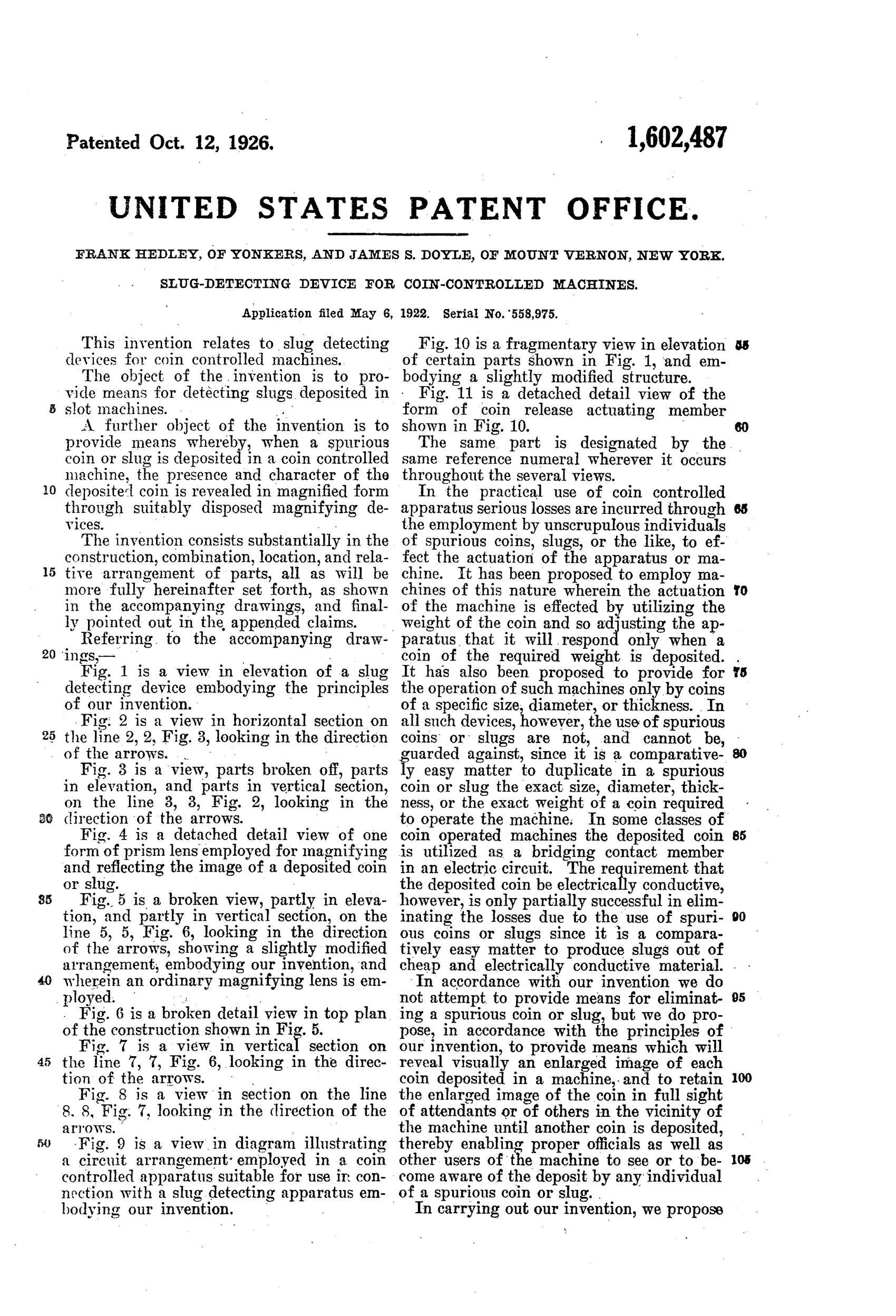
SLUG-DETECTING DEVICE FOR COIN-CONTROLLED MACHINES.
The slug detector that rejects nothing — it just shows everyone your coin, magnified
Slug detector with magnifying lens for coin machines
◉ How it works
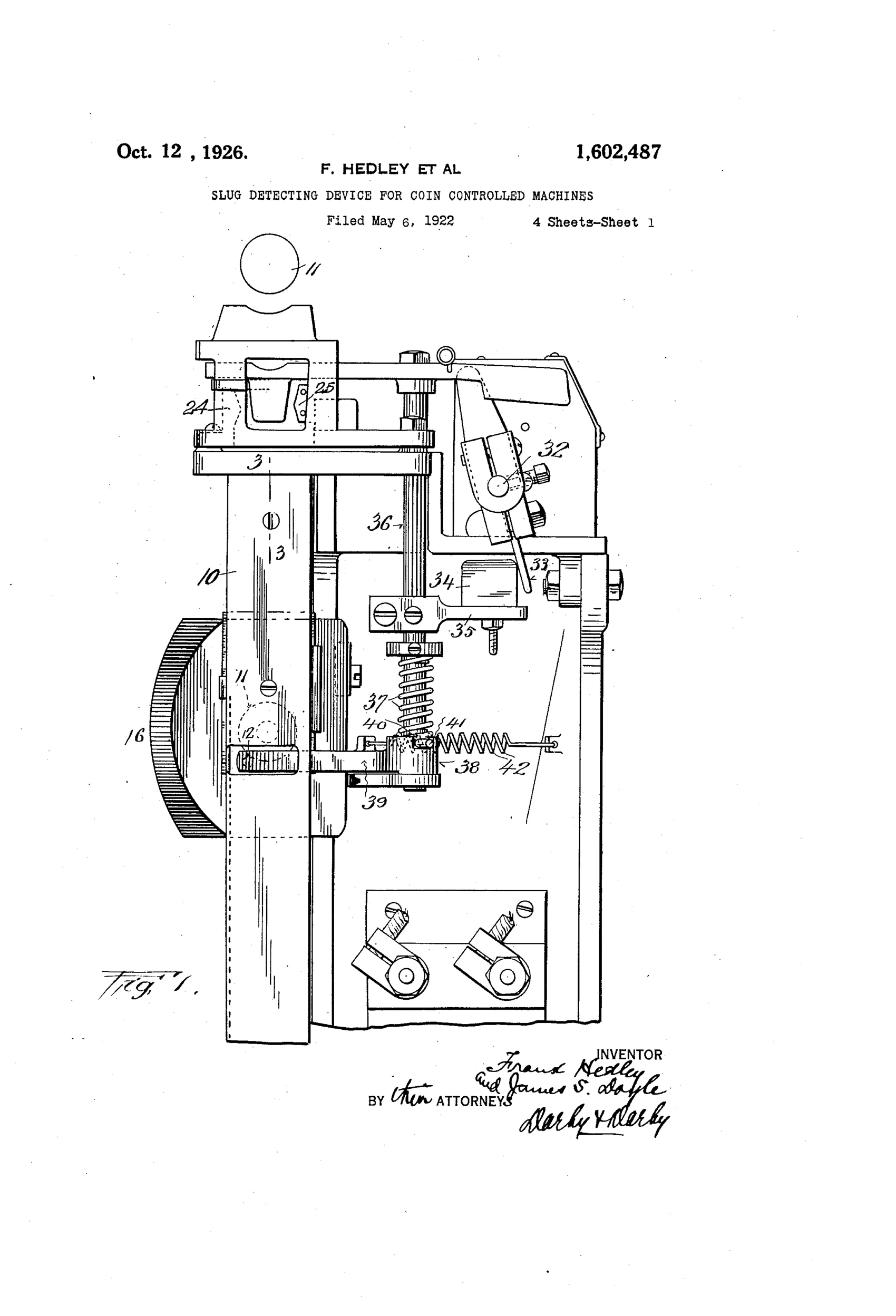
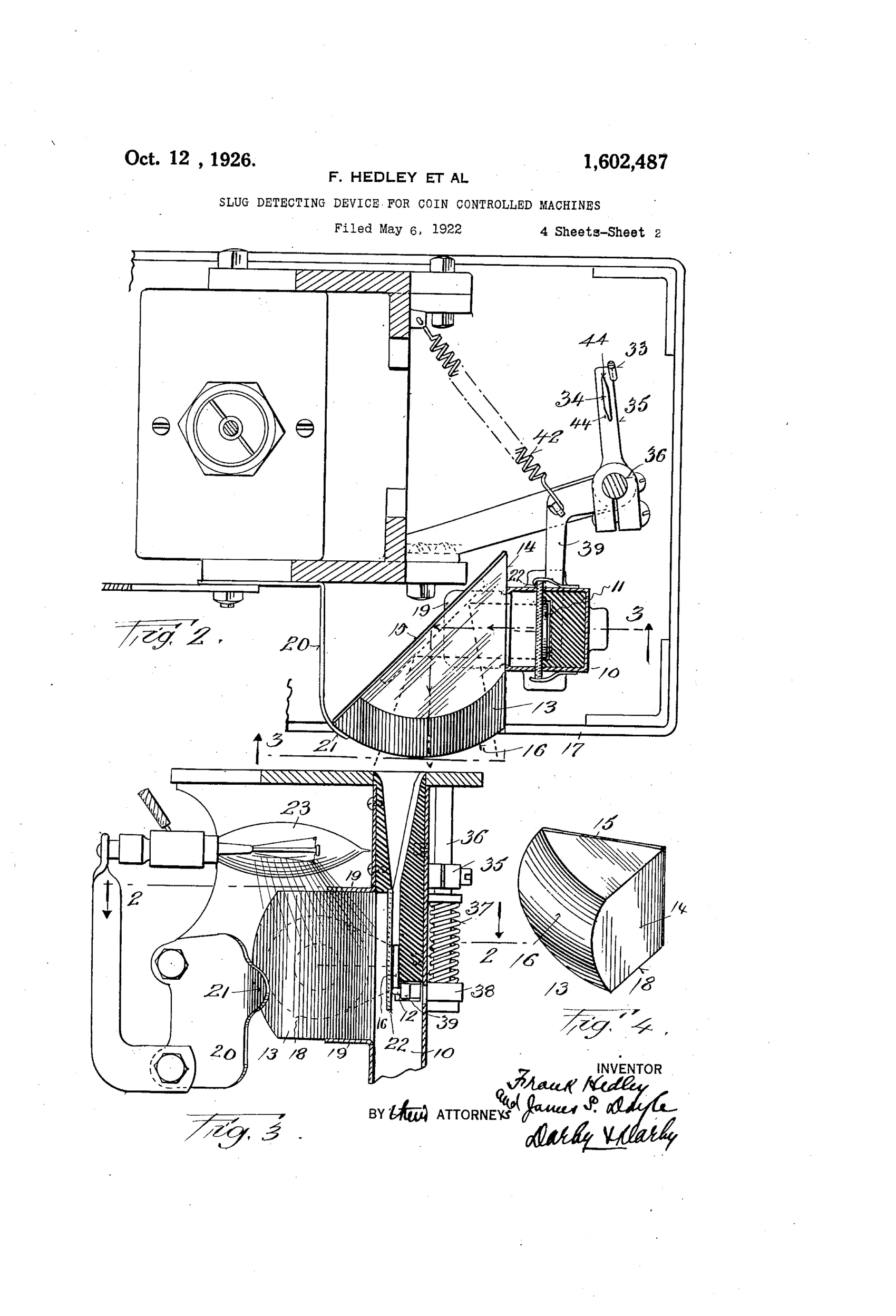
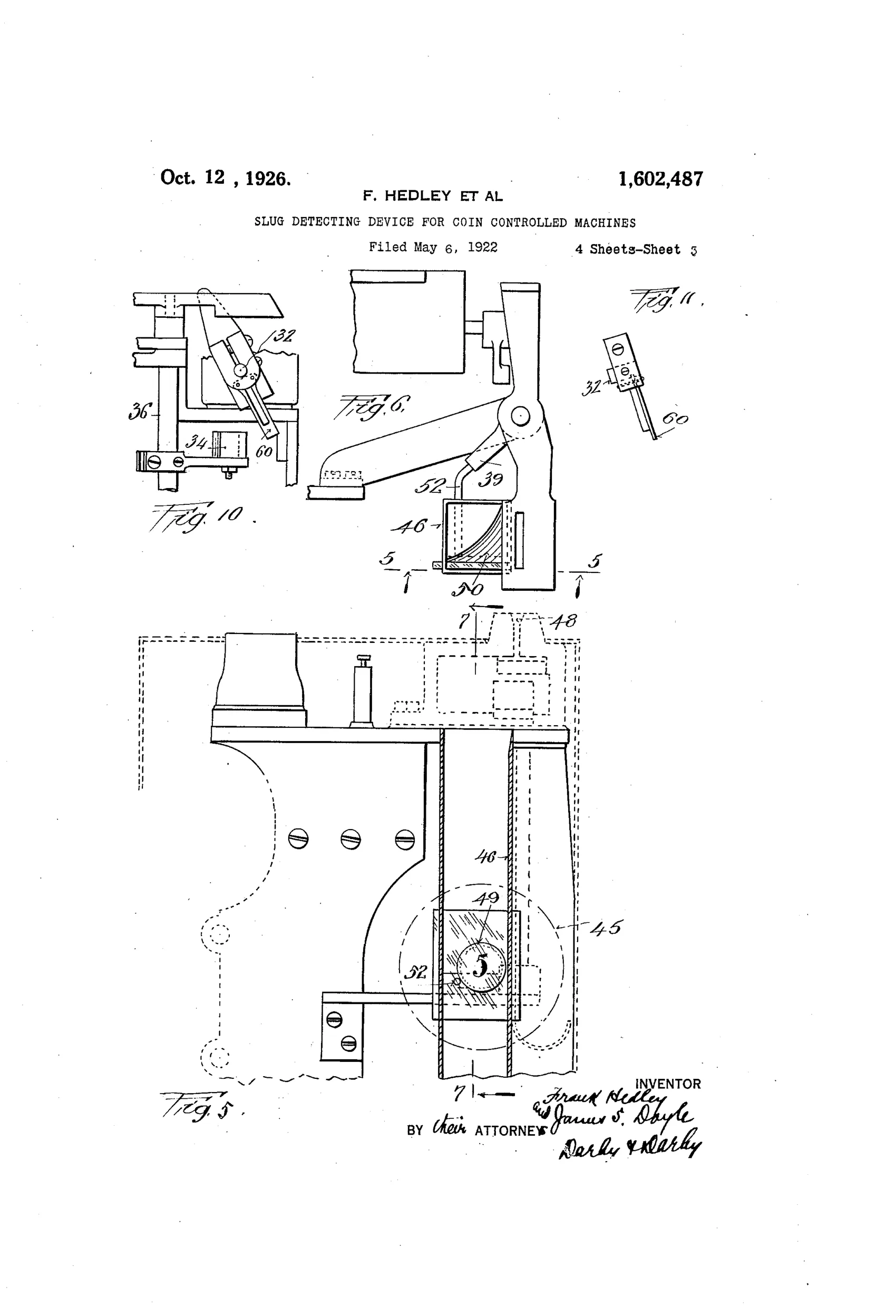
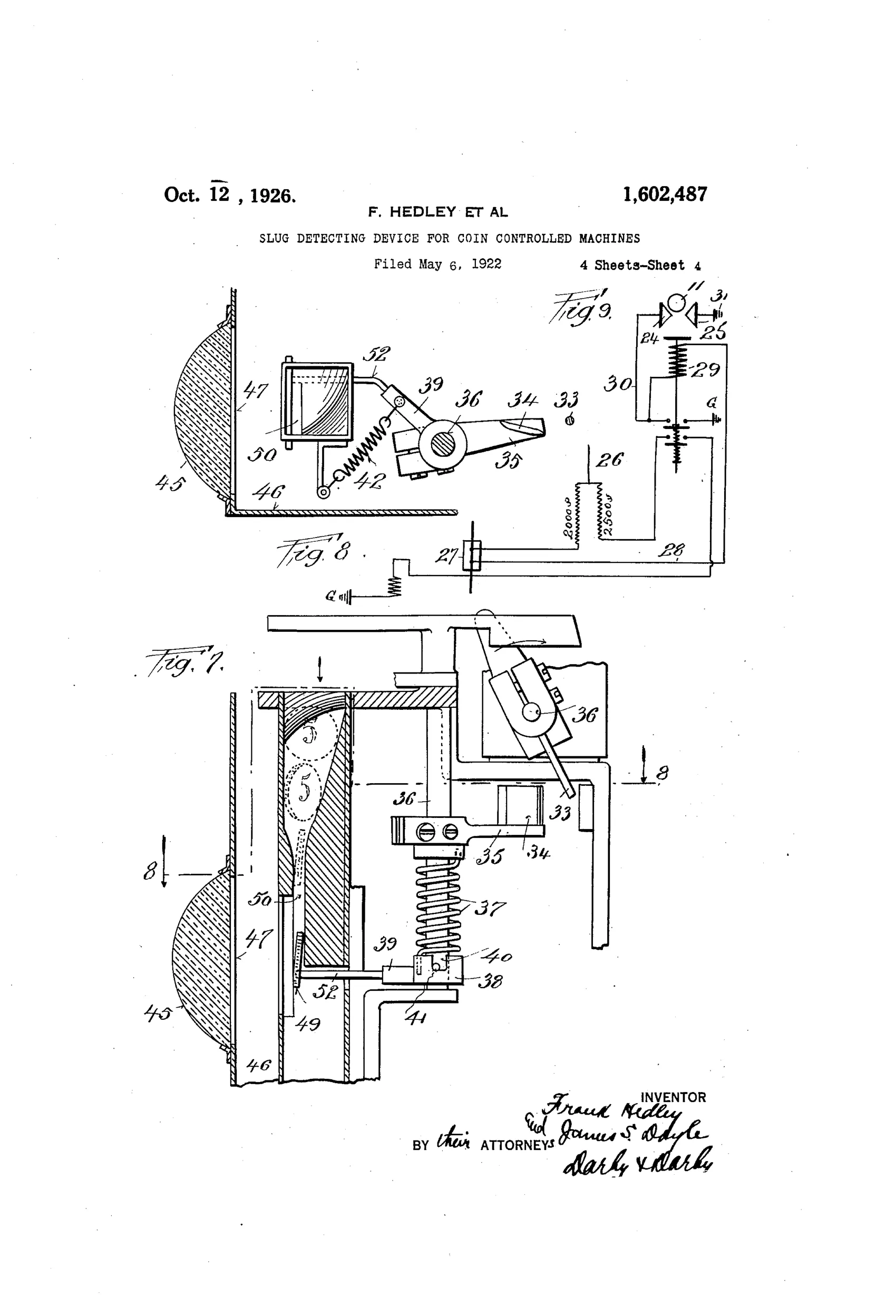
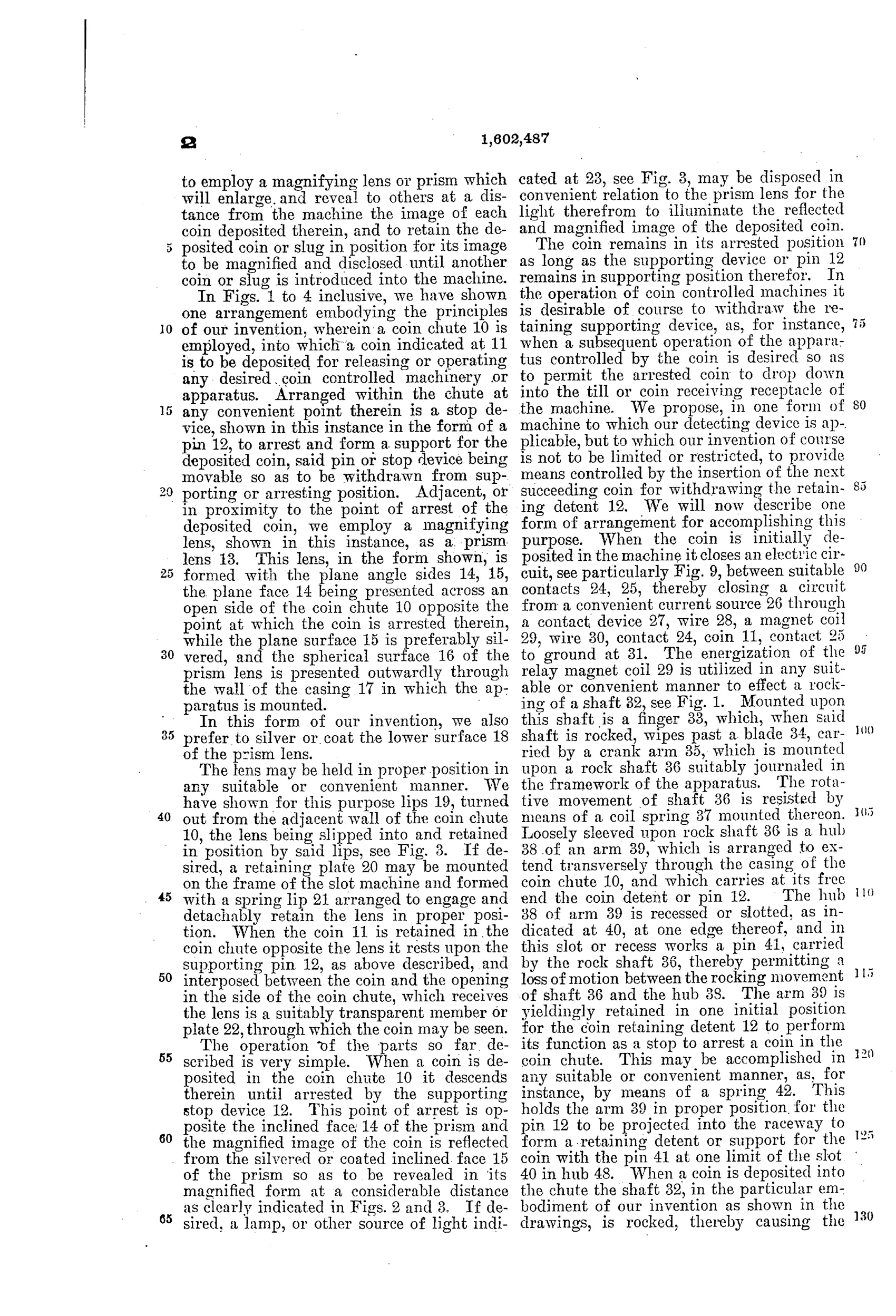
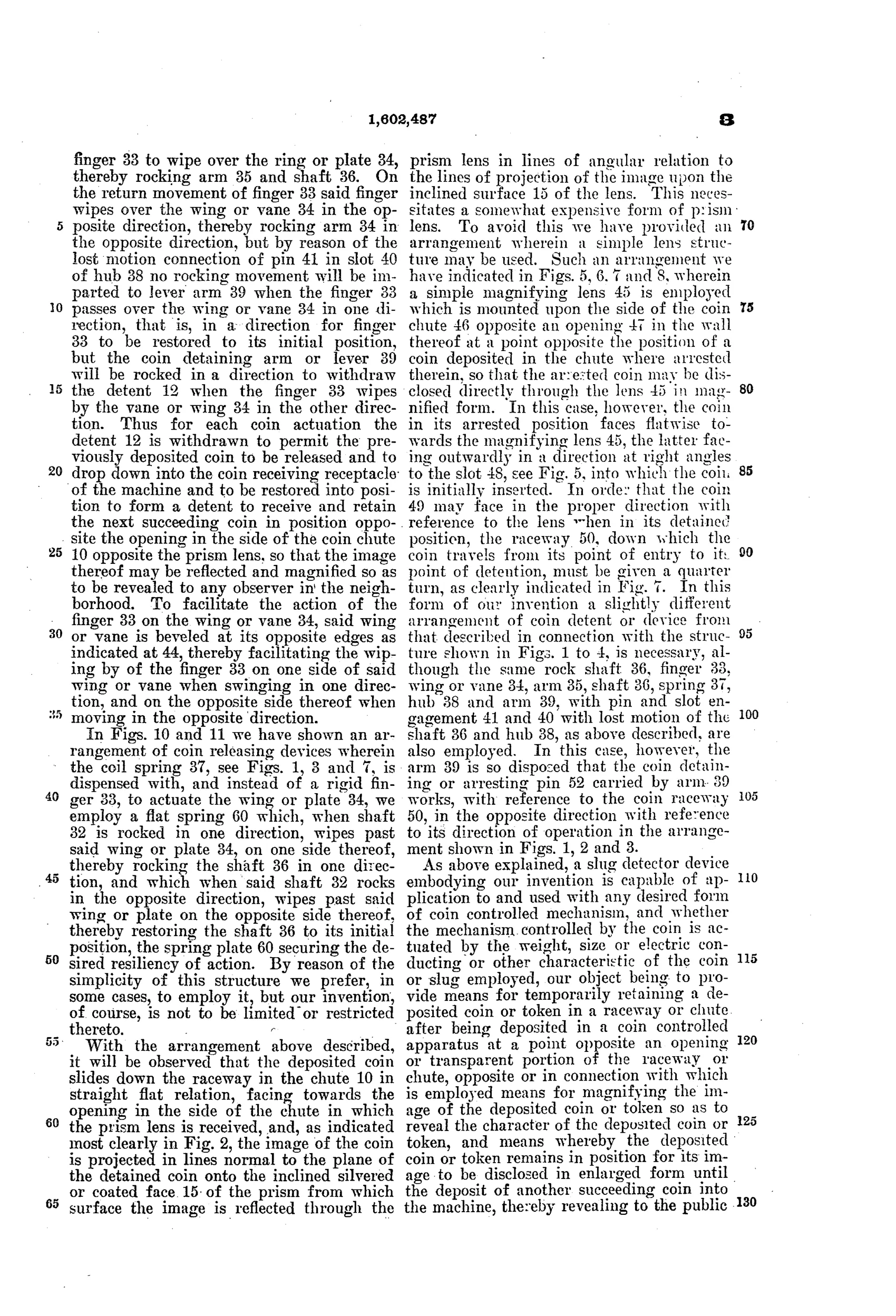
A deposited coin slides down a chute and is arrested by a movable stop pin positioned opposite a magnifying prism lens or ordinary lens mounted in an opening in the chute wall. The coin is held at an angle to the lens's reflecting surface so that its image is projected and magnified, revealing it to observers outside the machine until another coin is deposited. Depositing the coin closes an electric circuit energizing a relay magnet that rocks a shaft; this shaft drives a finger against a wing or vane, rocking a second shaft carrying a spring-loaded detent arm. A lost-motion pin-and-slot connection between the rock shaft and the detent arm's hub ensures the detent (stop pin) is withdrawn only on the return stroke, releasing the previously held coin into the receptacle while resetting to catch the next coin.
◉ What was claimed
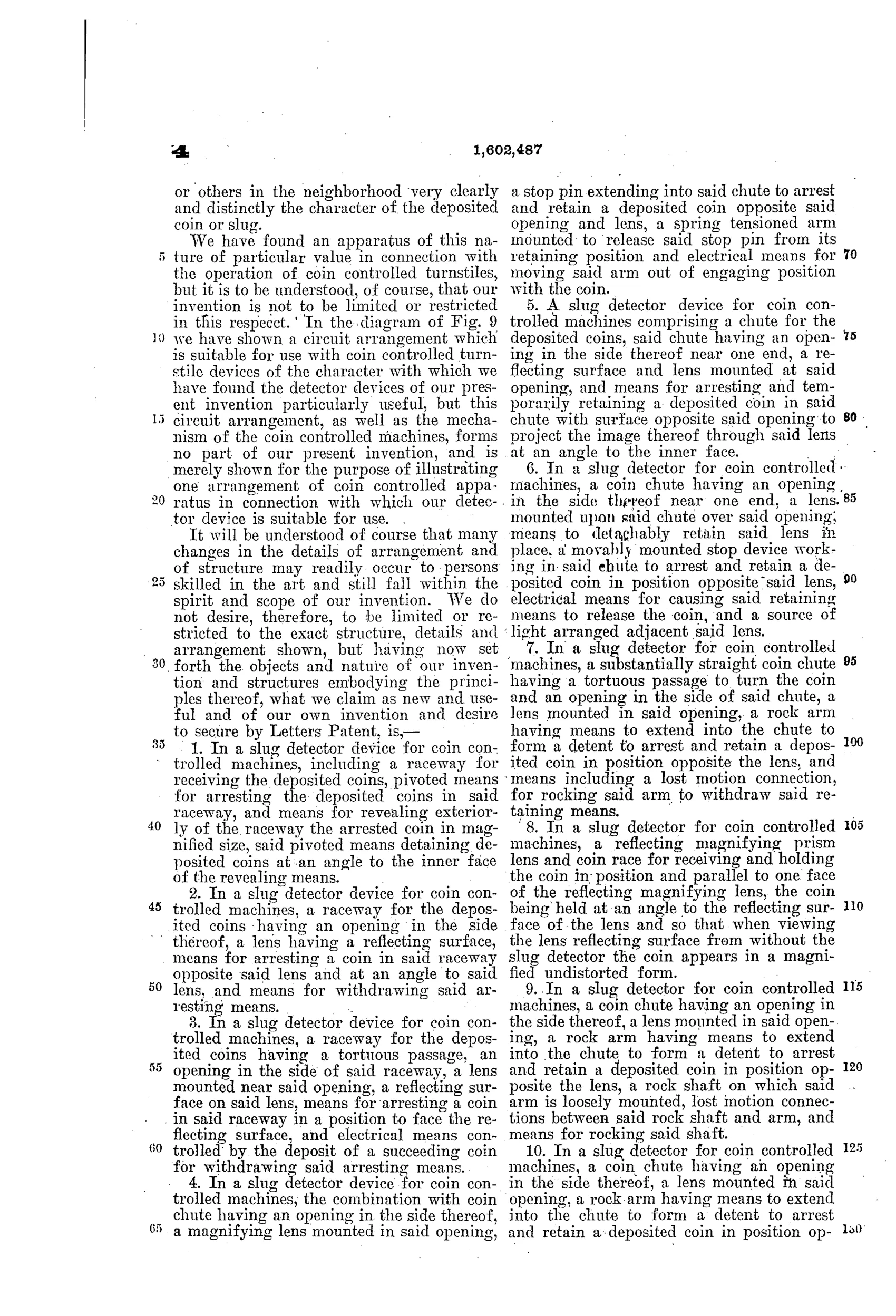
“1. In a slug detector device for coin controlled machines, including a raceway for receiving the deposited coins, pivoted means for arresting the deposited coins in said raceway, and means for revealing exteriorly of the raceway the arrested coin in magnified size, said pivoted means detaining deposited coins at an angle to the inner face of the revealing means.”
In plain English: The device uses a pivoting stop to hold a deposited coin at an angle inside a chute so a lens mounted on the outside can show onlookers a magnified image of the coin.
◉ In the inventor’s words
“In accordance with our invention we do not attempt to provide means for eliminating a spurious coin or slug, but we do propose, in accordance with the principles of our invention, to provide means which will reveal visually an enlarged image of each coin deposited in a machine, and to retain the enlarged image of the coin in full sight of attendants or of others in the vicinity of the machine until another coin is deposited, thereby enabling proper officials as well as other users of the machine to see or to become aware of the deposit by any individual of a spurious coin or slug.”— Frank Hedley and James S. Doyle, from the specification
Fate unknown
Hedley-Doyle turnstiles were certainly manufactured for the IRT, but whether this specific magnifying-lens coin display went into production isn't documented; a surviving turnstile with the lens window would settle it.
◉ Commentary
Most patents in this class try to out-engineer the slug: magnets, weight gates, rocking gauges. Hedley and Doyle admit defeat in the first paragraph and pivot to psychology. Their device stops each deposited coin behind a magnifying prism lens set into the chute wall, holding it there — enlarged and visible to attendants and bystanders — until the next patron drops a coin and bumps it along. You cannot cheat the machine quietly; your nickel-sized washer sits in a lighted window with your name effectively on it.
The mechanics are tidier than the idea sounds. The coin is arrested at a deliberate angle to the lens's reflecting face so its image projects outward properly. Depositing a coin closes a relay circuit that rocks a shaft, and a lost-motion pin-and-slot connection makes sure the detent withdraws only on the return stroke — so the old coin is released exactly as the new one arrives to take its place in the window. It's a one-in, one-out escapement for evidence.
The names matter here: Frank Hedley ran the Interborough Rapid Transit in New York, and Doyle was his mechanical collaborator on the coin-operated turnstiles that defined subway fare collection. This patent belongs to that turnstile family, where thousands of anonymous riders per hour made shame a cheaper deterrent than precision gauging. As a detection philosophy it's a dead end — but an honest one.
Commentary by Claude, The Counterfeit Coin Detector Patent Archive’s resident enthusiast